Exploring Our Enduring Fascination With Design’s Darker Side
There is something undeniably seductive about a room that refuses to be cheerful.
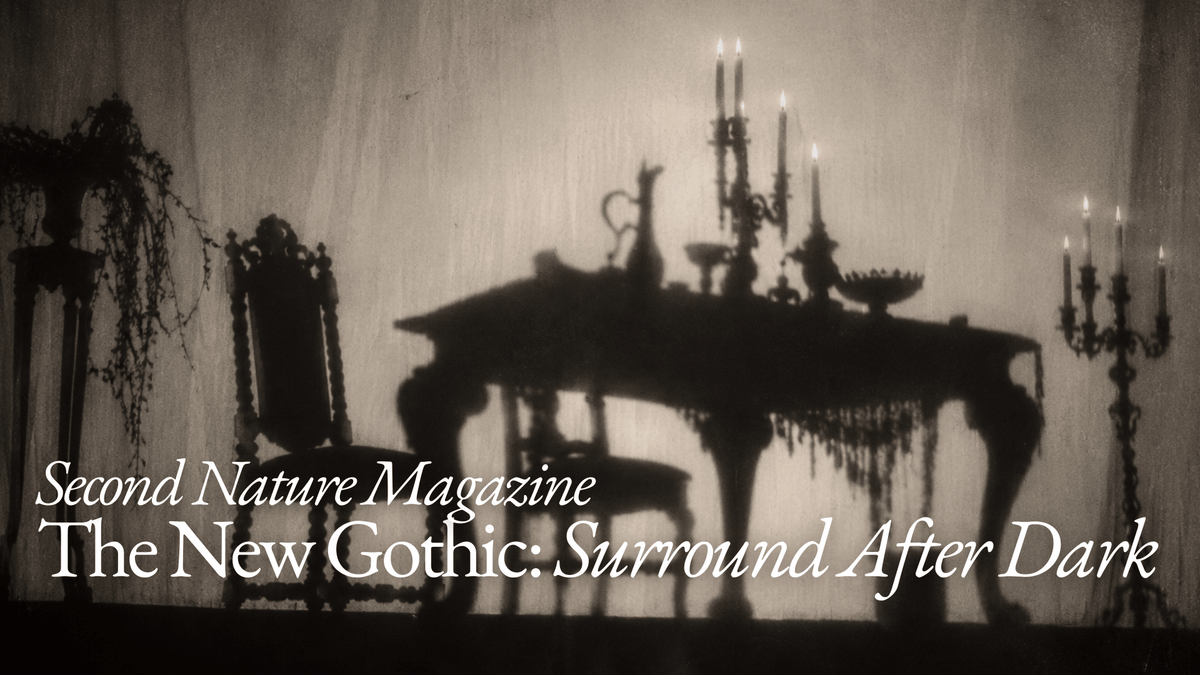
A darkened corner. Heavy wood. A bronze object whose purpose isn’t immediately obvious. The flicker of a candle against an imperfect wall. Furniture with silhouettes that feel almost architectural. These are spaces that don't reveal themselves all at once—and perhaps that is precisely the point.
As Halloween approaches, darkness inevitably finds its way back into the cultural imagination. But in interiors, our fascination with the darker side of design has never really disappeared.
Gothic design has simply learned how to dress differently.
Today, it is less about recreating a medieval castle and more about atmosphere: shadow, drama, mystery and objects with a certain presence. The gargoyles and velvet curtains are optional.
Welcome to Surround After Dark →

Darkness Has Always Had Good Taste
The original Gothic movement was never particularly interested in subtlety.
Beginning in medieval Europe, Gothic architecture gave us soaring cathedrals, pointed arches, intricate carvings, stained glass and interiors deliberately designed to make humans feel small. Light and darkness were treated almost like building materials—controlled, exaggerated and used to create emotion.
Centuries later, the Gothic Revival brought that theatricality into domestic life. Dark timber, ornate furniture, decorative metalwork and medieval references entered homes, while the Victorian fascination with mourning, spiritualism and the supernatural gave darkness an entirely new aesthetic vocabulary.
But Gothic has never stayed neatly within one historical period.
It resurfaces whenever design becomes a little too polished.
After decades dominated by white walls, pale oak and interiors seemingly designed to photograph perfectly at noon, perhaps it was inevitable that we would eventually want the lights turned down.

The Anti-Beige Rebellion
There is nothing inherently wrong with beige.
We may simply have seen a lot of it.
For years, contemporary interiors have gravitated toward a particular version of calm: cream sofas, travertine tables, boucle chairs and carefully restrained palettes. Beautiful, certainly—but restraint eventually creates its own rebellion.
The New Gothic offers an antidote.
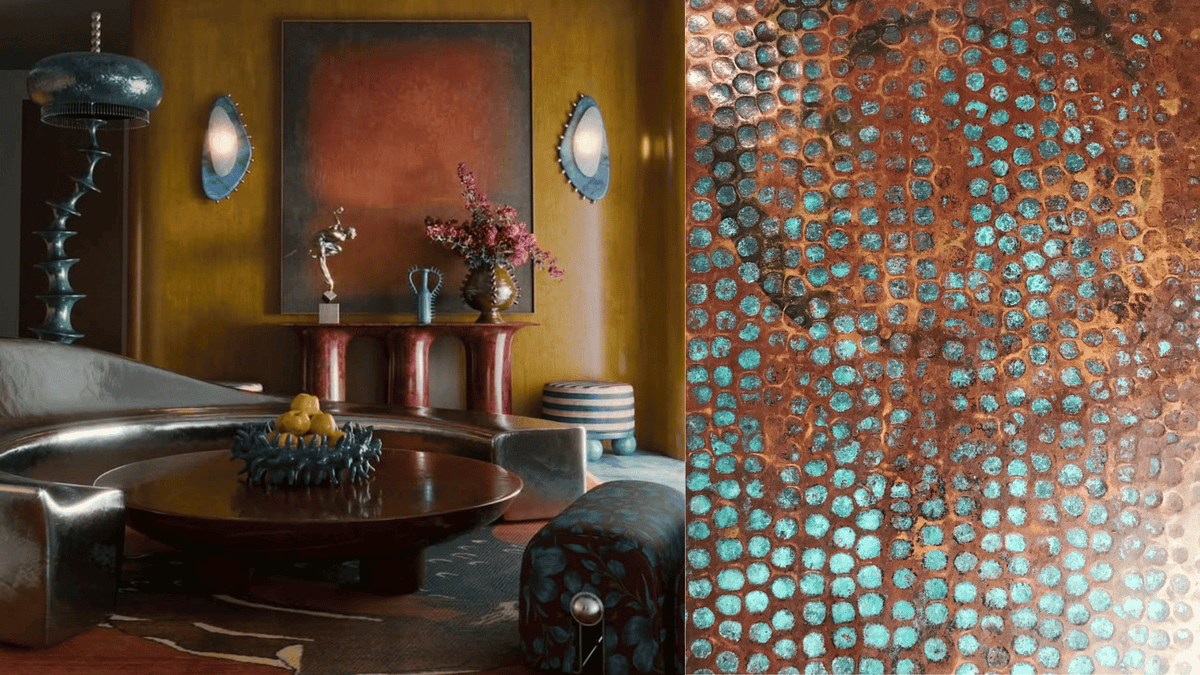
Instead of trying to make a room feel lighter, it asks what happens when we lean into darkness. Chocolate woods replace blonde timber. Blackened metal appears beside polished stone. Bronze develops a patina rather than being polished back to perfection. Sculptural furniture casts exaggerated shadows across the floor.
Even objects become stranger.
A slightly unsettling sculpture, an oversized candlestick or an unusually shaped chair can suddenly become more interesting than something conventionally “beautiful.”
This isn't maximalism for maximalism's sake. It is about allowing interiors to have tension.
Because a room can be beautiful without being perfectly behaved.
Noteworthy Surround Pieces: (Pictured Below)
- British Colonial Indian Embossed Leather Highback Oakwood Dining Chair - Set of 2
- Anglo-Indian Dragon Carved Walnut Antique Bureau Writing Desk
- Royal Anglo-Indian Rosewood Ornate Hand Carved Console Table
- Anglo-Indian Craved Blackwood Planter Stand

A Little Bit Haunted
The best New Gothic interiors don't look like Halloween sets.
In fact, they may not immediately look Gothic at all.
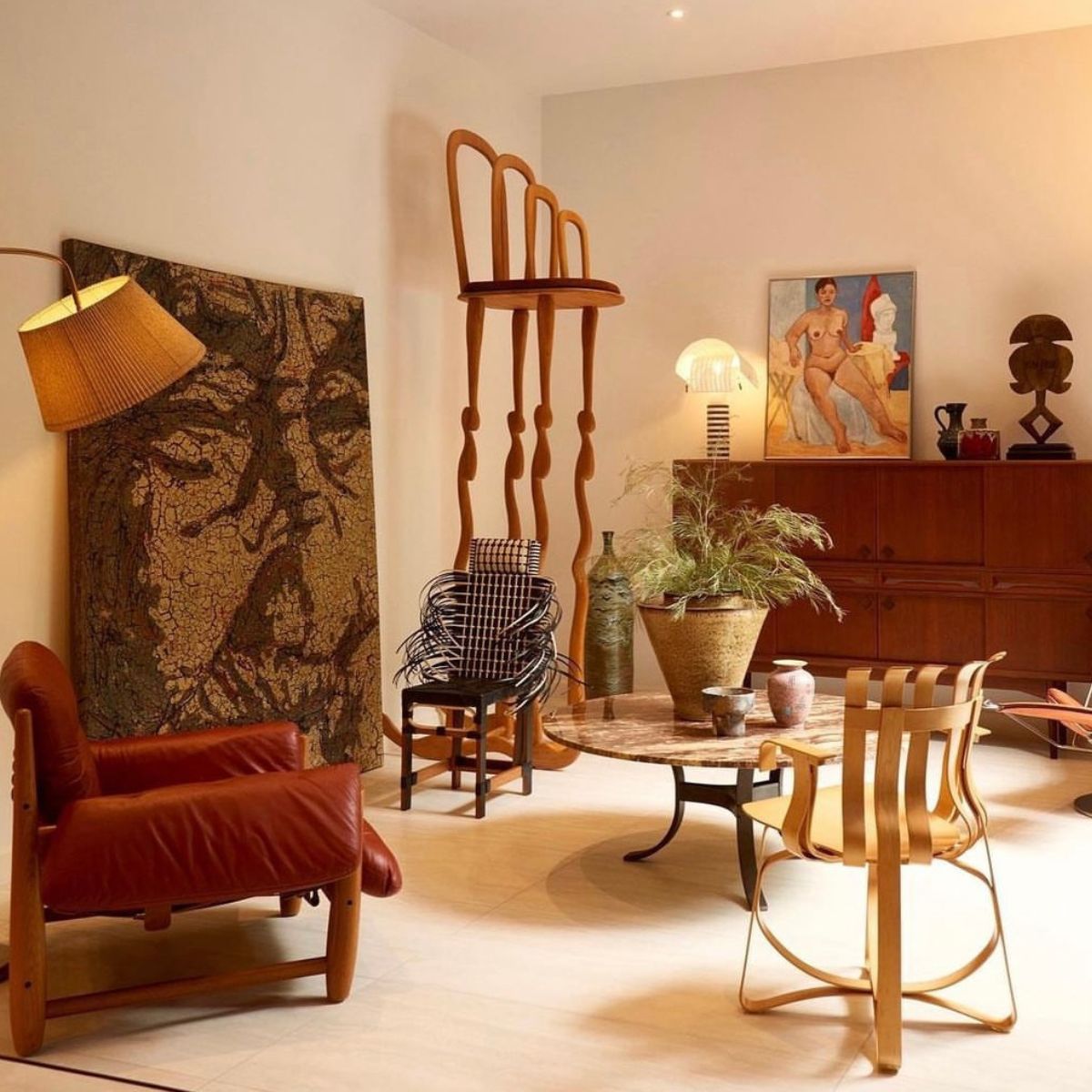
The feeling often comes from the combination of objects rather than any single piece: an antique-looking cabinet beside contemporary art; a brutalist chair beneath an ornate mirror; an irregular bronze sculpture sitting quietly on a dark timber console.
Nothing quite matches, yet everything seems to belong.
There is an important distinction here between dark and gloomy. A successful dark interior still needs contrast. A glossy surface catches the light. A pale wall makes a black chair more dramatic. Glass, chrome or polished stone prevents heavier materials from swallowing the room entirely.
And then there is candlelight—the oldest interior-design trick in the book.
Few things transform ordinary objects as effectively. Texture becomes exaggerated. Metal glows. Corners disappear. Familiar furniture suddenly develops a little mystery.
It turns out atmosphere doesn't require much.
Sometimes it just requires switching off the ceiling light and turning leaving on just one chandelier.
Chandelier’s of Surround: (Pictured Below)
- 3-Light Murano Grape Clusters With Glass Leaves Chandelier
- Multi-Tiered Crystal Waterfall Floor Lamp with Decorative Faux Foliage Base (Set)
- French Rococo Style Five-Light Wall Sconce

The Modern Gothic Object
The New Gothic doesn't need to look Gothic at all. In its modern form, darkness is found in material, silhouette and attitude rather than ornamentation.
Think glossy black surfaces, smoked glass, abstract sculptures, irregular forms and objects that feel curious without being obviously macabre. A matte-black ornament can carry as much drama as an antique candelabra; an unusually shaped chair can feel more mysterious than anything carved or gilded.
The trick is not to fill the room with darkness, but to introduce pieces that interrupt it. Against a lighter, more contemporary interior, a black sculptural object or unexpected silhouette suddenly carries more weight.
These are objects that don't announce themselves as Gothic. They simply have a little edge—a sense of mystery, tension or strangeness that makes you look twice.
Modern Gothic lives in the suggestion, not the costume.
On Our Radar: (Pictured Below)
- Pink Eye Painting of Face on Black Paper
- Ink Console - Matte Black
- The Cupolas Jewelry Box
- Metamorphosis

Why We Keep Returning to the Dark
Design tends to reveal what we are craving.
Sometimes we want serenity. Sometimes nostalgia. Sometimes fantasy.
And sometimes we want a room with a little danger in it.
Perhaps that explains why Gothic ideas continue to reappear centuries after the movement itself. Darkness creates mystery, and mystery invites curiosity. A perfectly illuminated room tells you everything immediately. A shadow asks you to look again.
That feels particularly appropriate around Halloween, a holiday built around transformation, theatricality and our strange enjoyment of being slightly unsettled.
But when November arrives, the black furniture doesn't have to disappear.
Halloween may give us an excuse to indulge in the macabre, but these rooms have a life well beyond October. There will always be something compelling about an interior that keeps a few secrets—one that becomes better after sunset, rewards a closer look, and isn't afraid of a little unease.
So dim the lights. Keep the strange chair. Let the bronze tarnish.
A little darkness looks good at home.