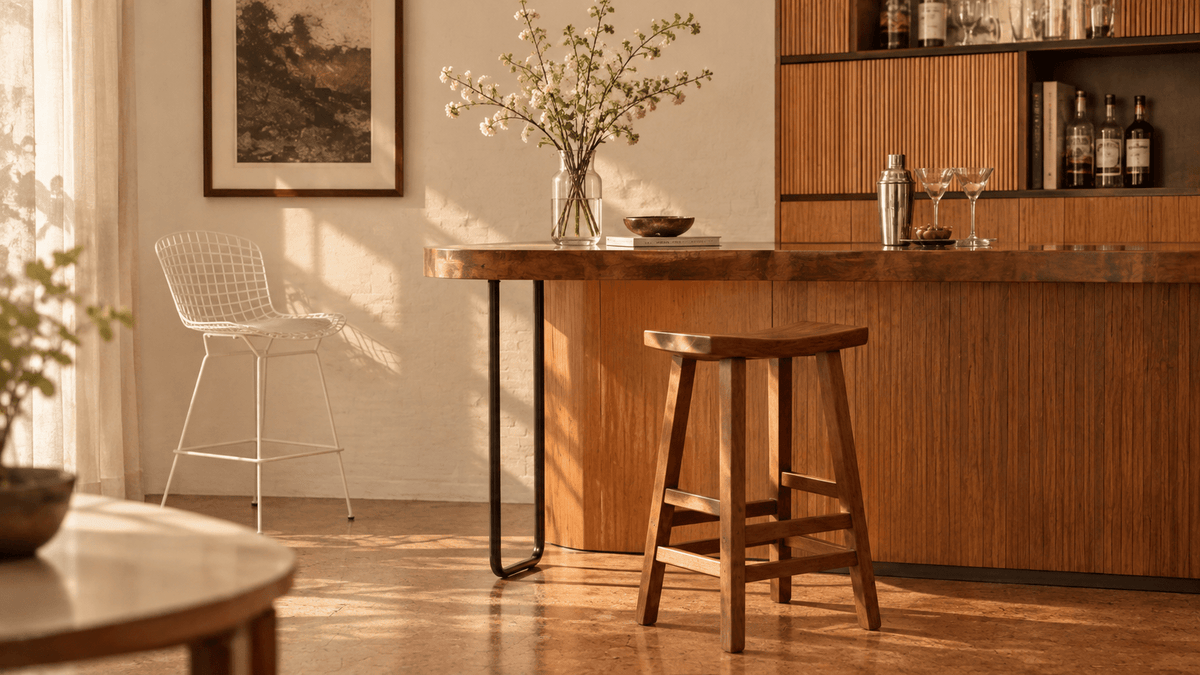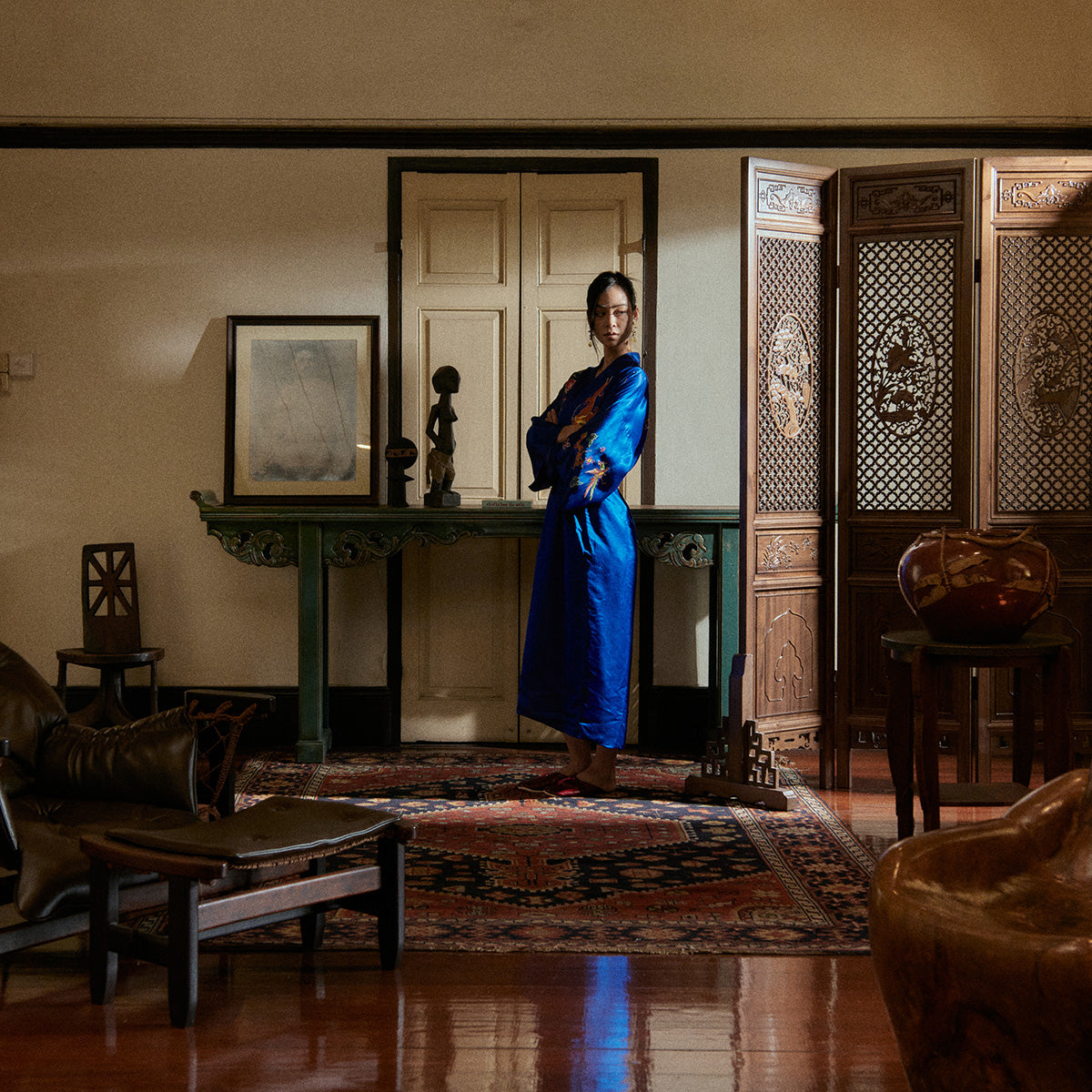
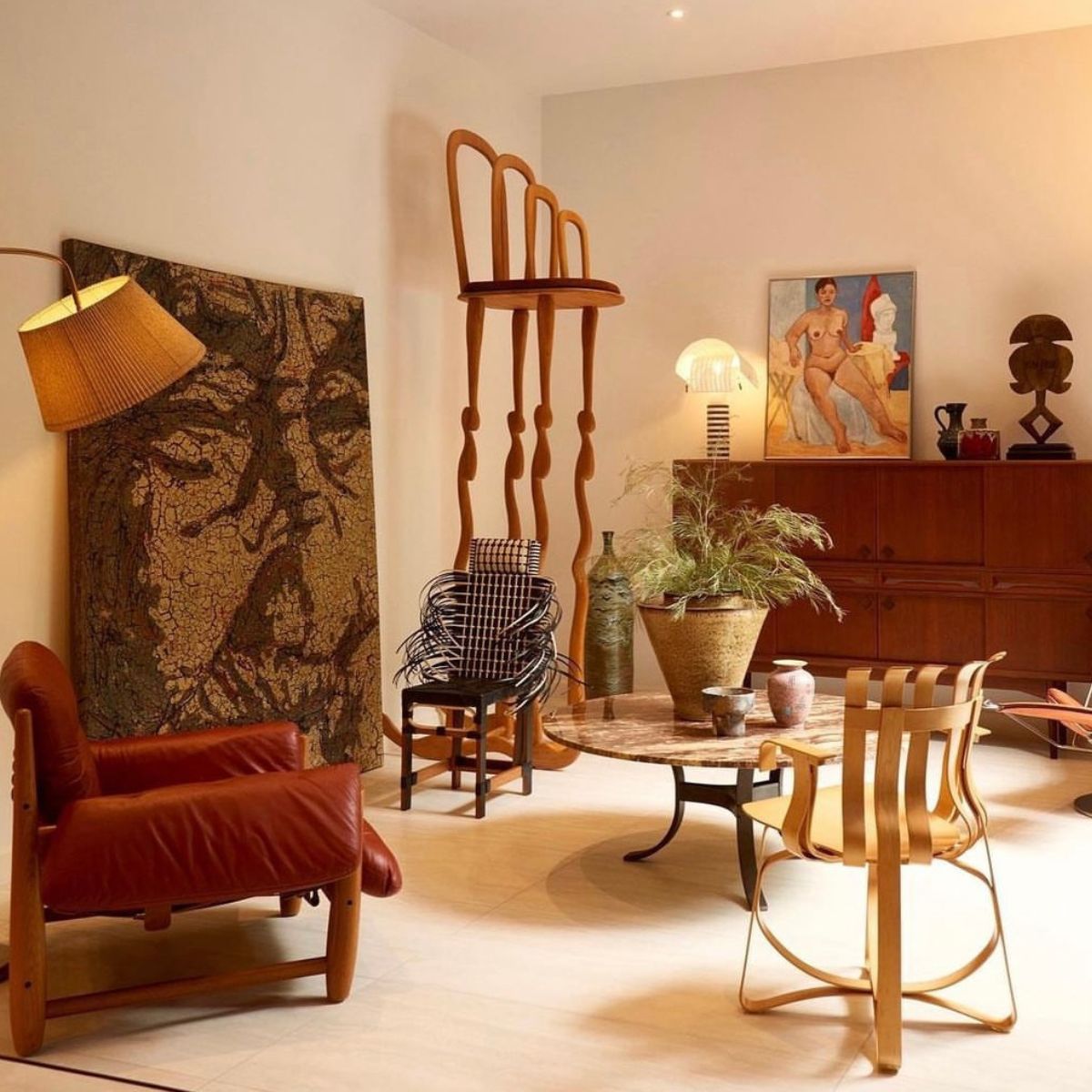
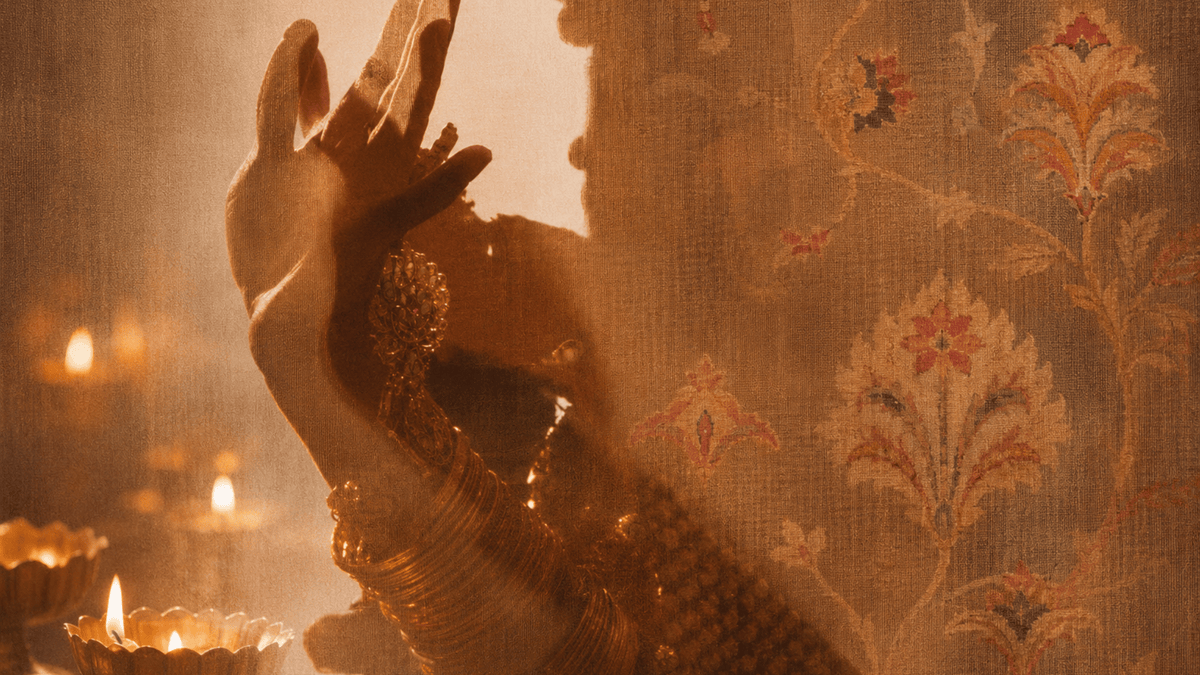
As homes are illuminated for the Festival of Lights, Diwali offers a lesson in something designers have long understood: light has the power to transform not only a room, but the way we experience it.
There are few occasions when light becomes quite as architectural as it does during Diwali.
Across homes, entrances are illuminated, candles and diyas flicker against polished surfaces, flowers gather around thresholds and colour finds its way onto floors in intricate patterns. Rooms that are familiar throughout the year suddenly take on another character. Corners glow. Metals shimmer. Shadows become part of the decoration.
Known as the Festival of Lights, Diwali is rooted in ideas of renewal, prosperity and the triumph of light over darkness. But within the home, its traditions reveal something equally compelling from a design perspective: atmosphere is often created not by adding more, but by reconsidering what is already there.
Explore The Golden Hour Collection →

The House, Illuminated
Long before layered lighting became a phrase in the interior designer's vocabulary, Diwali understood the emotional effect of illumination.
Traditionally, small oil lamps known as diyas are placed throughout the home, their collective glow transforming spaces after sunset. Unlike the uniform brightness of overhead lighting, candlelight is deliberately imperfect. It pools around objects, catches the edge of a brass vessel and allows other parts of the room to disappear quietly into shadow.
It is this contrast that makes a room feel intimate.
The same principle can be applied to contemporary interiors. A sculptural lamp beside an armchair, candles gathered along a dining table or a single source of warm light falling across an artwork can completely alter how an object is perceived. Under softer illumination, materials begin to reveal themselves differently: bronze becomes warmer, glass more jewel-like, lacquer more reflective and woven surfaces considerably more tactile.
For Diwali, perhaps the most effective approach is simply to turn some of the lights off.
Surround’s Light and Gold: (Pictured Below)
- Golden Leaf Candle Holder - Set of 2
- Vintage Crystal Lustre Hurricane Lamp
- Two-arm Emerald Colored Bohemian Table Lamp
- Handcrafted Brass Lotus Tray

A Celebration of Material
Diwali interiors are wonderfully material.
There is the earthy surface of clay diyas, the gleam of brass and silver, fresh flowers, coloured powders, embroidered textiles and the unmistakable richness of candlelight moving across them all.
Rather than approaching festive decoration as something separate from an interior, consider working with the materials already present in the room.
A bronze vase becomes especially beautiful surrounded by low candlelight. A silver tray can hold flowers or sweets. Coloured glass scattered across a table catches and refracts the glow around it. Even a familiar rug can suddenly become the centre of a room when its pattern is echoed by smaller objects placed nearby.
The result needn't be symmetrical or overly styled. In fact, a little irregularity makes the setting feel collected rather than decorated.

Pattern at the Threshold
Among Diwali's most recognisable traditions is rangoli—decorative patterns traditionally created on floors and at entrances using materials including coloured powders, rice and flower petals.
Their position at the threshold is particularly beautiful: decoration becomes an act of welcome.
For the design-minded, rangoli also offers an extraordinary study in composition. Repetition, geometry, florals and saturated colour meet within a single temporary artwork. There is something refreshingly anti-permanent about it. A considerable amount of care is devoted to creating something designed to exist only briefly.
Its influence needn't be interpreted literally. A patterned rug beneath an entrance console, an embroidered textile, an arrangement of flowers or a collection of objects organised around a central point can carry the same visual rhythm into a contemporary room.
The idea is not to reproduce tradition as decoration, but to notice what it can teach us about pattern, placement and ceremony.
Explore our Unique Colors and Patterns: (Pictured Below)
- Thai Embossed Aluminium Bowl (L) - 30cm
- Thai Embossed Aluminium Nesting Bowls Set
- Thai Embossed Aluminium Bowl (M) - 22cm, Green
- Suchai Pop Up Thai Embossed Aluminium Bowl Tissue Holder - 14cm
- Vintage Persian Carpet – Ivory All-Over Floral | 420 x 300 cm

Colour After Dark
Diwali makes a persuasive case for colour.
Saffron, turmeric yellow, vermilion, fuchsia, emerald and deep blue become particularly vivid against the warmth of firelight. Metallic surfaces add another layer entirely, introducing flashes of gold, bronze and silver as people move through the room.
For an interior that tends toward neutrals, this doesn't require repainting the walls. A single richly coloured textile, patterned cushion, artwork or vessel can be enough.
Think of colour as punctuation rather than wallpaper.
Against timber, stone, linen and other natural materials, even the smallest jewel-toned object can command attention.

The Art of Gathering
Of course, the most important Diwali interiors are not designed simply to be looked at.
They are prepared for people.
Homes are cleaned and renewed, tables are set, sweets are exchanged and rooms are readied for family and friends. Decoration becomes inseparable from hospitality.
This is perhaps Diwali's most enduring design lesson. A beautiful home is not merely a composition of beautiful things; it is a setting for rituals. The chair pulled closer to another chair. The tray waiting to be passed around. The table that becomes crowded by the end of the evening. The lamp left glowing long after dinner has finished.
Objects acquire meaning through use.
And perhaps that is why the most compelling festive interiors rarely feel perfect. They feel inhabited.