


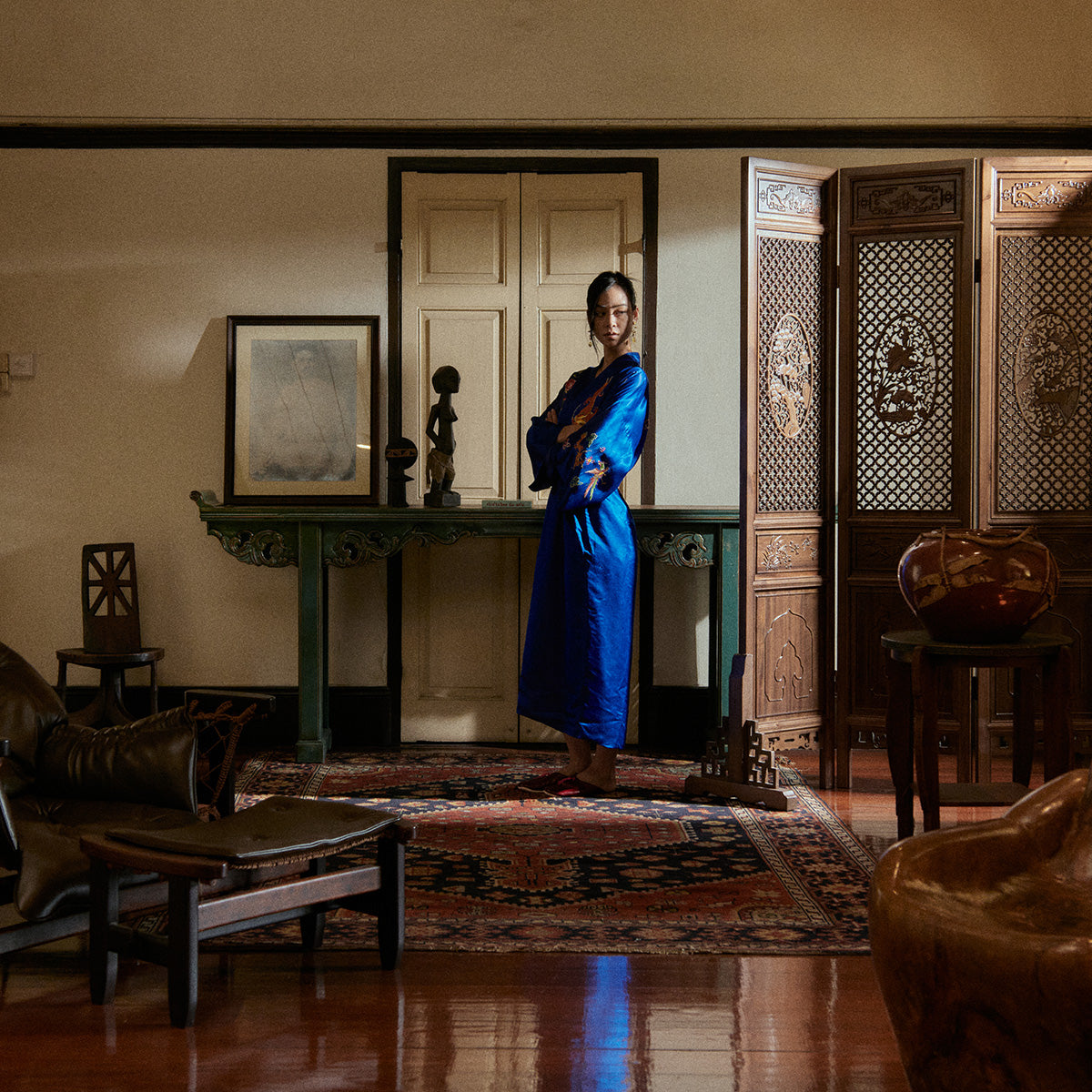
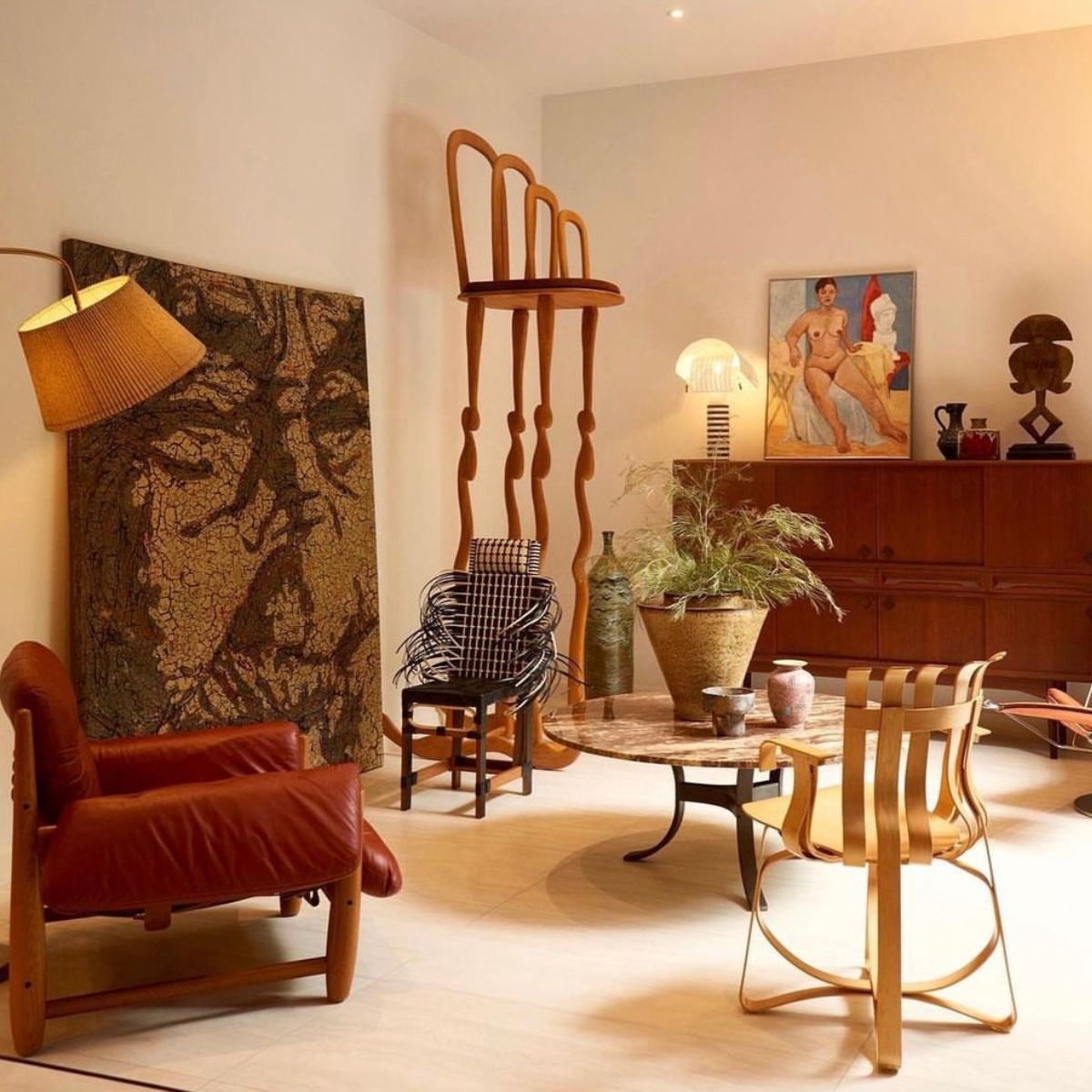

As part of our Sourcing Stories series, we travel to Hang Dong to open conversations with friends and fellow collectors who share our love for the hunt — the thrill of discovery, the stories behind their finds, and the passion we now pass on to you.
Meet the family behind Golden Triangle Hang Dong and trace their generational journey through the architectural and artisanal heritage of the East — from hand-carved temple fragments to village-made objects shaped by centuries of craft. With a deep affection for Chinese and Indian workmanship, what began as quiet digs for beauty slowly evolved into a lifelong devotion to antiques, guided by instinct, memory, and an eye for beauty in unexpected places.
There are stories born from design, and there are others shaped from necessity. But every so often, a story emerges from the desire to preserve what shouldn’t be lost to time, to preserve what time should never wash away, and to remind us how much story is behind each antique piece. Golden Triangle Hang Dong is one such story.
But before we begin, its worth asking; what separates an object from an antique? Is it age alone that grants significance, or is there something deeper, perhaps a meaning that is etched into the woodgrains, where the imperfections show a story: An antique, built with human hands, with a purpose.
For some, antiques are simply relics. old things. For others, namely Veerachai Tuntisak and his sons Plume and Prem, the trio who spearhead Golden Triangle Hang Dong, they are vessels of heritage, a bridge between centuries, and windows into cultures that deserve to be preserved for generations to come, rather than fizzle out and disappear.
This philosophy lives at the heart of Golden Triangle Hang Dong, a two-hectare art village in Chiang Mai that has transformed from humble beginnings as a tiny workshop into one of northern Thailand's most distinctive antique furniture hubs, and now, a gallery. But the story begins not in Thailand, but thousands of miles away and across the pond in Chicago.
The Journey Home
Over three decades ago, Veerachai worked at Golden Triangle's Chicago branch, having left behind his previous life as a truck driver and construction contractor in Thailand.
During his stint in the States, Veerachai began travelling to trade shows in Soho and Washington, DC, experiences that broadened his perspective beyond what other Hang Dong sellers typically saw at the time. He was building not just inventory, but vision.
But there is no place quite like home, and the pull to return grew strong with each passing minute spent across the globe. He wanted to be with his partner, to work in Thailand, and to return to Hang Dong, where the flame had originally ignited.
The plan was to source antiques across Asia and ship them to Chicago. What started in a small rental shop, paying 3,500 baht per month, would eventually blossom into something Veerachai himself admits he never initially envisioned.
But as finances grew, so did aspirations. And as Golden Triangle Hang Dong growth proved to be exponential, Veerachai’s brother, who understood the market well, suggested transforming the operation into a gallery.
The Art of Discovery

Sourcing antiques is rarely straightforward. It's about culture, rapport, and reading unspoken hierarchies. As Veerachai explains, sellers judge your character and purchasing power. Think of it as a private club, where building trust becomes just as crucial as your capital.
In an industry such as this, Veerachai stresses the importance of looking far beyond business relationships, but to make friends and become family with those who you source your antiques from.
This familial hierarchy is what determines your foundations of success. To understand local customs, respect traditions, know when to negotiate, and how to leverage patience. The sourcing journey has taken him from Myanmar to China to India, following waves of pricing and availability. Initially, price mattered more than aesthetics; some may see it as a practical necessity when capital was limited, but the decision also centred on the purchasing power of prospective customers at the time.
But along the way, the process became less about cost and more about love. Of course, finances matter, but what matters more is passion. And as Golden Triangle Hang Dong grew to where the decision to acquire an antique could be made through love, above all, then perhaps this is what establishes them as the perfect heir to preserve this piece of history.

For his sons, the learning is ongoing. Prem recalls the first trip he and Plume took alone — an experience that pushed them into deep waters. Without their father’s seasoned eye, every detail carried weight: Is the piece complete? What era does it belong to? What patterns define it? What wood was used? How will it live in a modern home? These questions reveal a truth that every collector knows: the value of an antique extends far beyond its price tag.
For his sons, however, the learning continues. Prem recalls his first independent trip with Plume as the most challenging. Without their father's guidance, they found themselves thrown into the deep end, where important questions arose: Is the piece complete? What are the patterns? What year is it from? What wood was used? How will we display it?
It is these very questions that reflect the complexities of just how antiques retain their value beyond just the price tag.
It’s this layered understanding — the interplay of history, instinct, and intuition — that forms the heart of Golden Triangle Hang Dong. And it’s precisely the same sensibility that led our paths to cross. Surround Living not only share their respect for tradition, but we respect the relationships required to bring truly meaningful objects to light: the trust built with artisans, the sensitivity needed when navigating cultures, the patience that sourcing demands, and the reverence required to preserve what matters.
For us, an antique doesn’t begin at the moment we acquire it. Its journey starts long before — with the people who discover it, restore it, and breathe life back into it. That lineage of care is something we honour deeply. This shared devotion is why our partnership with Golden Triangle Hang Dong feels less like a collaboration and more like a continuation of the same story — one built on preserving heritage with humanity, and passing it on to those who will cherish it next.
Restoration as Reverence

What happens after an antique arrives in Thailand? Some were bought with slight defects, while others may require touching up, fixing, or restoration. And here is where Thai craftsmanship, particularly in Hang Dong, shines.
Veerachai describes local artisans as possessing genuine love for their professions. Craftsmanship takes time, and perfection can’t be rushed. Local artisans are encouraged to take as long as needed, and their enthusiasm is what money can’t buy.
But does restoration erode authenticity? Veerachai doesn't think so. Working off what he sees on the antique itself, if a chair is missing one of four legs, the other three become the template and canvas.
In his view, heritage isn’t diminished; rather, it is preserved through care.
What Catches the Eye
Each member of the family brings a different lens to their appreciation. Veerachai, himself a woodworker by trade, admires Chinese wood-joining techniques and pieces dating back over 300 years to the Ming dynasty. Meanwhile, Indian products capture his attention through artistic patterns and heritage.
Plume, the antique specialist, shares his father's appreciation for Chinese and Indian styles, understandable given he grew up surrounded by them.
But he's particularly drawn to local Chiang Mai styles, which he sees as encompassing the best of both worlds in Indian and Chinese elements. Chinese florals, gods, and clouds combined with India's stronger emphasis on botanicals and deities.
Pream, who handles the technical and communications side, approaches antiques through the perspective of functionality and aesthetics. How can an antique enhance a modern space? How should it be displayed?
If Plume is all about history, Pream is all about re-imagination.
A Gallery for All Generations

The transformation of Golden Triangle Hang Dong into a gallery serves as a cue in helping people visualise possibilities. As Veerachai explains, a gallery format allows for antiques to be showcased in a cleaner, simpler way.
For younger customers, it makes antiques feel accessible rather than intimidating. For older generations, it helps them visualise how these pieces could function in their own spaces.
For the Tuntisak family, antiques aren't just old products that are hard to find; they're art pieces made with purpose, made with purpose, to be used somewhere specific, and designed to last. These antique pieces are made by like-minded individuals who value meaning, albeit a few centuries before our time.
Preserving the Fire

Perhaps it is the notion of meaning that makes Golden Triangle Hang Dong stand out among the rest. Plume and Prem, growing up alongside these pieces, have absorbed the desire to preserve not just the objects themselves but the appreciation for them.
Having a gallery, a space where heritage can speak without shouting, where craftsmanship from centuries past can find its place in the modern day, is how preservation unfolds.
The antiques sourced from all over the world, the restoration work performed by Chiang Mai's master craftsmen, and the theatrical displays, all of it serves a purpose to keep alive the fire of appreciation for objects that carry within them the accumulated skill, time, and intention of human hands.
Through their partnership with Surround Living, these antiques — shaped by centuries, restored by masters, and selected with intention — are given a new chapter. A chance to be seen, understood, and lived with again.
Because preserving heritage isn’t just about looking back. It’s about carrying it forward.


