Why designers continue to rely on antiques, artisanal craftsmanship, and storied objects to create interiors with lasting appeal.
In the most memorable homes, luxury rarely announces itself. It is not found in the newest furniture collection or the latest design trend. Instead, it emerges through layers—through rooms that feel lived in, curated over time, and enriched by objects with a story to tell.
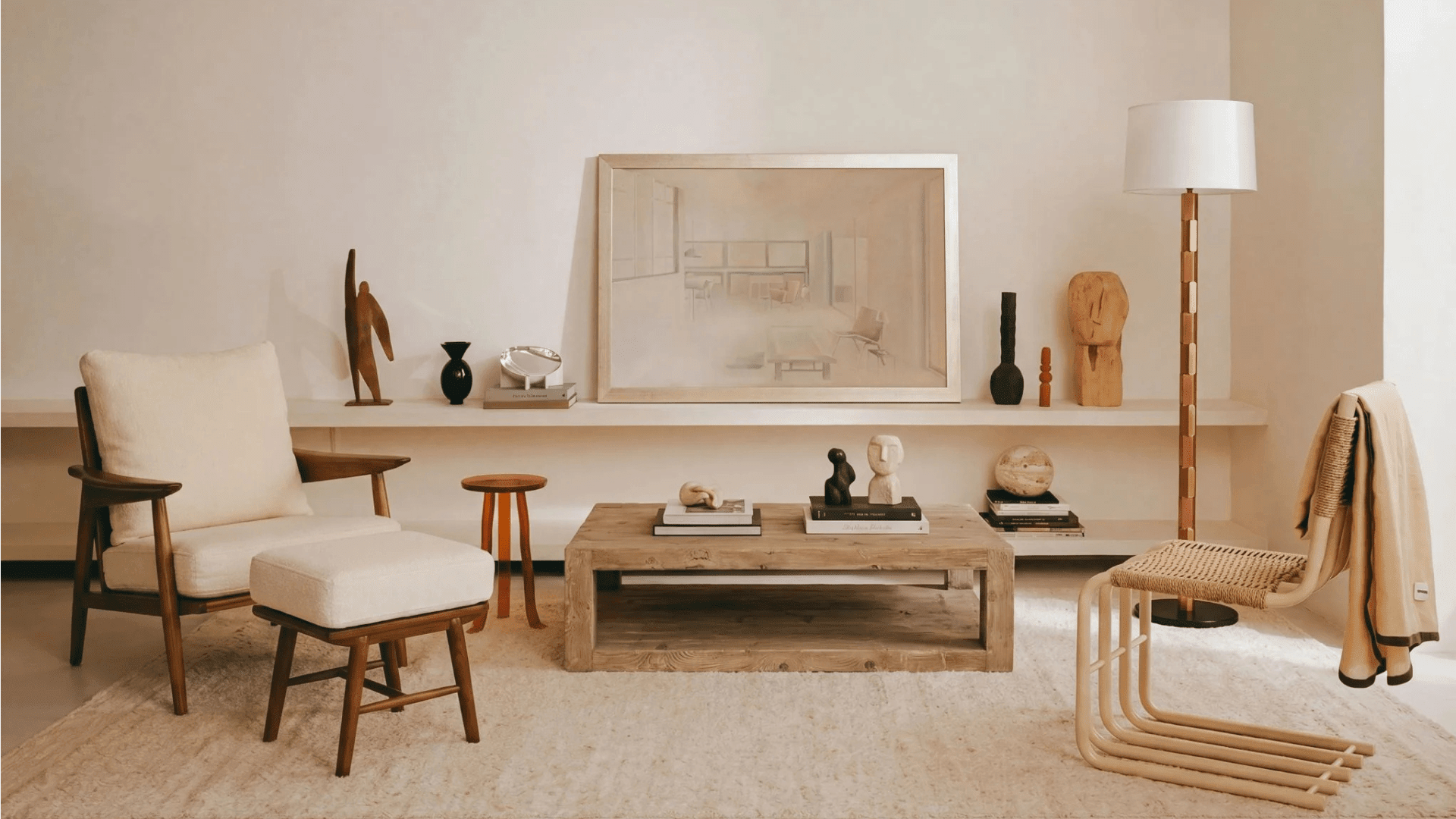
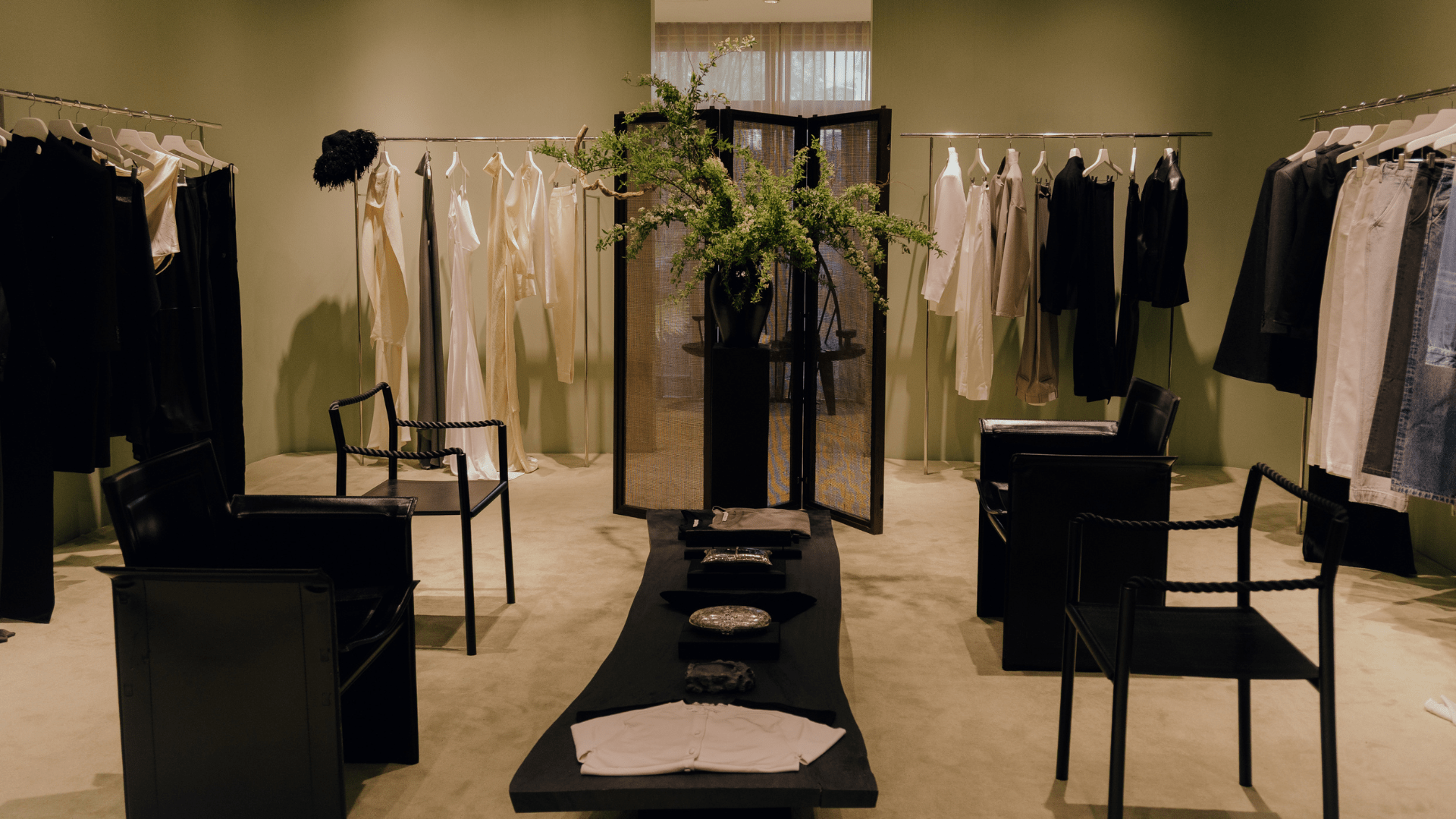
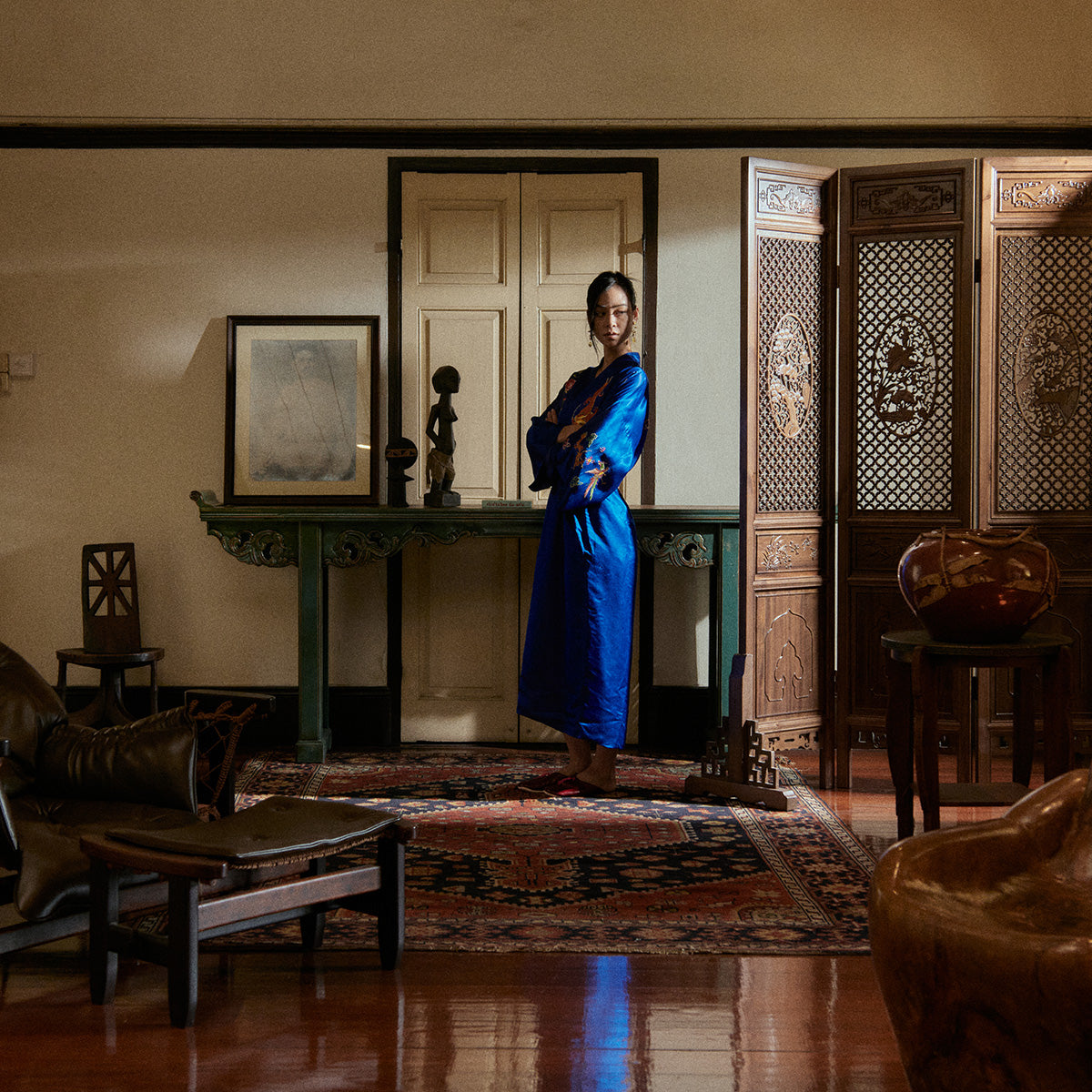
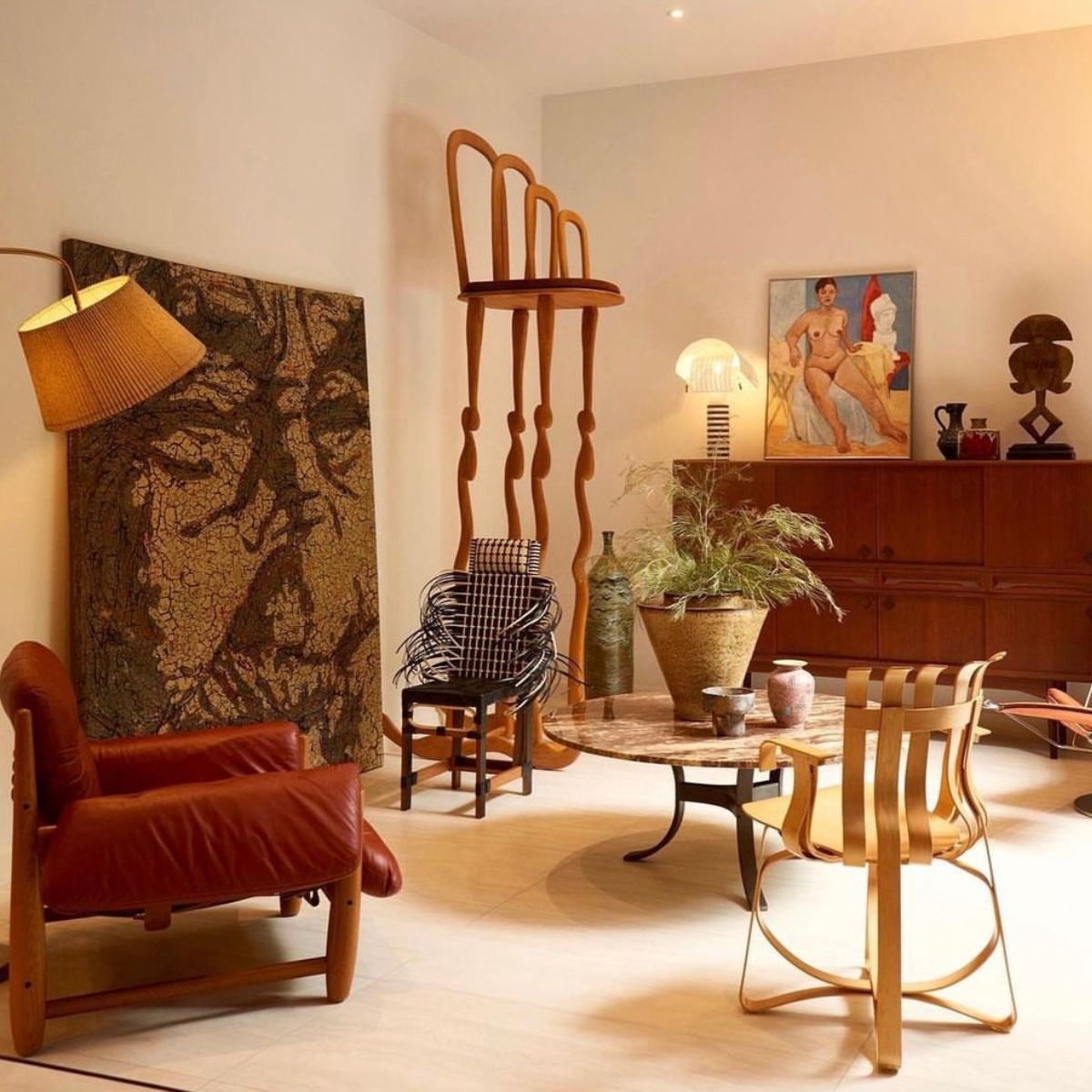
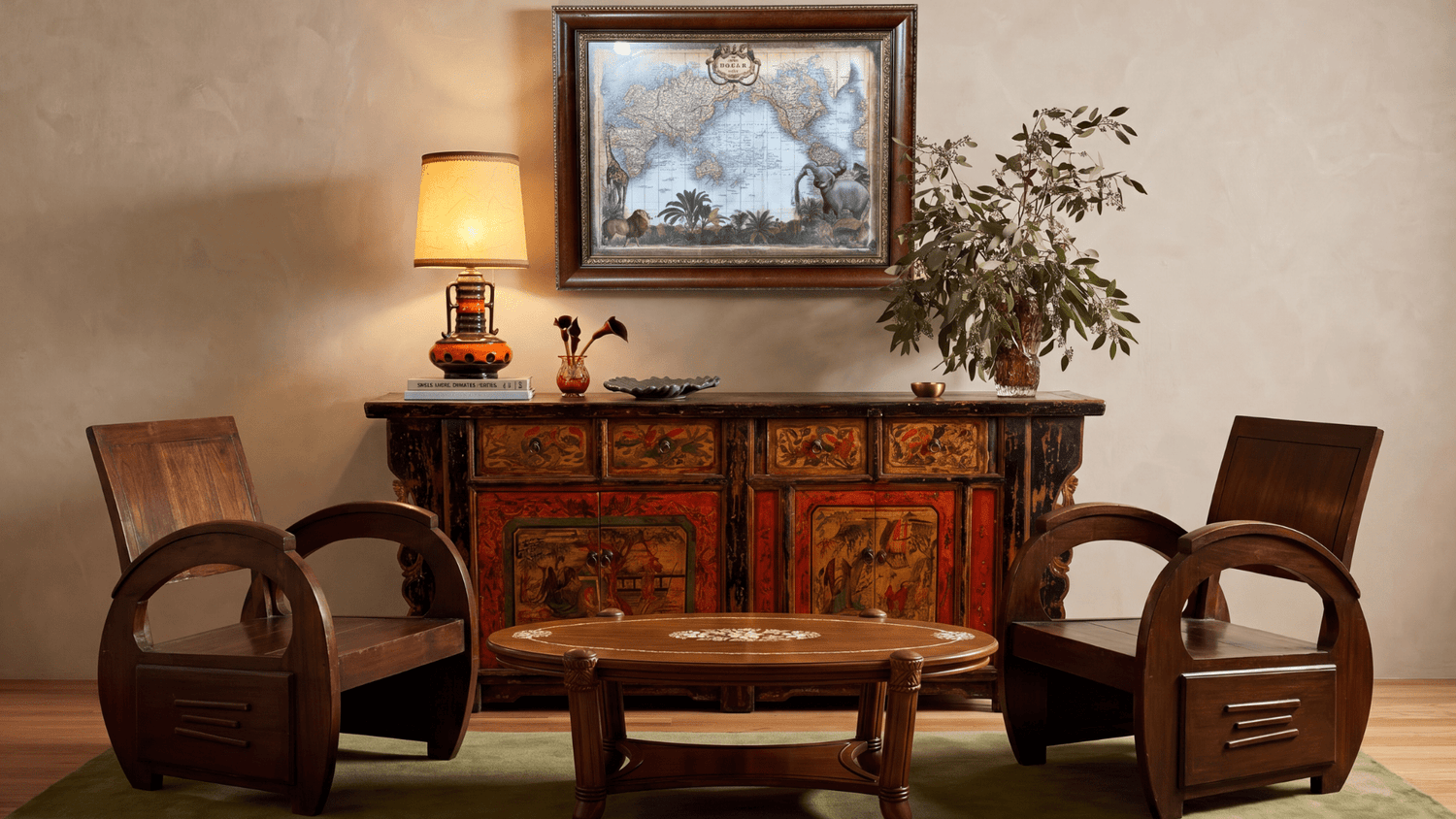
Surround Picks (Pictured above):
- Indo Chinese Dark RoseWood Thai Antique Chairs
- Polychromed Tibetan Cabinet Console
- Rosewood Coffee Table - Reproduction
- Large Fat Lava Ceramic Base Lamp with Cowhide Shade by Walter Gerhards
This is why designers across the world continue to champion vintage and antique furnishings. Beyond their aesthetic appeal, older pieces possess something increasingly rare in contemporary interiors: authenticity. They introduce depth, craftsmanship, and individuality, helping transform a beautifully decorated house into a home with character and soul.
As homeowners move away from purely trend-driven design, there is a growing appreciation for interiors that feel personal rather than prescribed. Vintage pieces offer exactly that. Whether sourced from a Parisian flea market, an estate sale in New England, or a family heirloom passed down through generations, these objects create a sense of permanence that transcends fleeting styles.
The Quiet Luxury of History
One of the defining characteristics of vintage décor is its ability to bring history into a room. A century-old writing desk, an antique mirror, or a handwoven rug carries traces of its past life. The subtle wear on a tabletop, the softened edges of carved wood, and the gentle patina of aged metal all contribute to a sense of authenticity that new furnishings often struggle to replicate.
In recent years, the design world has embraced the concept of "quiet luxury"—an aesthetic rooted in quality, restraint, and timelessness rather than overt displays of wealth. Vintage furnishings embody this philosophy naturally. They signal discernment rather than excess, suggesting a collector's eye rather than a shopper's impulse.
The result is an environment that feels sophisticated without appearing staged.
Why Craftsmanship Matters More Than Ever
Many antique and vintage pieces were produced during periods when furniture was built to endure generations of use. Traditional joinery, hand-carved detailing, solid hardwood construction, and artisanal finishes were once standard practice.
Today, these qualities are increasingly valued by designers seeking to create homes with longevity.
A vintage walnut sideboard, for example, often offers a richness of material and craftsmanship that would be prohibitively expensive to reproduce today. Likewise, antique dining tables, cabinetry, and occasional furniture frequently reveal meticulous construction techniques that have become uncommon in mass-market production.
For homeowners, investing in such pieces is not merely a stylistic choice—it is a commitment to quality.

The Enduring Appeal of Antique Mirrors
Among the most transformative vintage acquisitions is the antique mirror.
Designers frequently describe mirrors as architectural elements rather than decorative accessories. A large gilt mirror above a fireplace can become the focal point of an entire room, while an antique French mirror in an entryway introduces elegance before a guest has even crossed the threshold.
What makes vintage mirrors particularly compelling is their character. Slight foxing in the glass, delicate imperfections, and richly detailed frames lend warmth and depth that newer alternatives often lack.
They reflect more than light; they reflect a home's personality.
Surround Picks:
- Louis XV Bronze Finish Large Trumeau Mirror
- Genova Louis XV Period Shaped Mirror
- Walnut Antique Mirror Hand-Etched, Floral Design

Rugs That Tell a Story
Every exceptional room begins with a strong foundation, and few design elements achieve this more effectively than a vintage rug.
Hand-knotted rugs possess a tactile richness and complexity that machine-made versions struggle to emulate. Their intricate patterns, naturally faded colors, and evidence of age create an atmosphere that feels both layered and welcoming.
Designers often use vintage rugs to balance contemporary architecture, introducing softness and warmth into otherwise minimal spaces. They can anchor furniture arrangements, define open-plan living areas, and provide visual continuity throughout a home.
Perhaps most importantly, they age gracefully. Unlike many modern materials that deteriorate with use, quality rugs often become more beautiful over time.
Surround Picks: (Pictured Below)
- Vintage Caucasian Kazak Rug
- Vintage Qashqai Gabbeh Rug
- Newly-Made Tribal Samarkand Rug
- Vintage Afghan Baluch Prayer Rug
- Vintage Kilim Carpet Rug – Geometric Tribal Design


Lighting as Functional Sculpture
Few elements influence a room's mood more dramatically than lighting.
Vintage chandeliers, brass sconces, Murano glass pendants, and sculptural table lamps offer a sense of artistry that extends beyond their practical purpose. Even when unlit, these pieces serve as visual focal points.
Many designers encourage clients to think of vintage lighting as jewelry for the home. A thoughtfully selected fixture can introduce glamour, elegance, or architectural drama while simultaneously grounding a room in history.
Because lighting sits at the intersection of form and function, it is often one of the most effective ways to elevate an interior.
Surround Picks:
- Basket-Shaped Crystal Chandelier
- 5-Light Murano Grape Clusters With Brass Leaves Chandelier
- 3 Bronze Cherub Figures with 6 Light Branches Chandelier
- Bohemian Circular Glass-Beaded and Crystal Pendant

The Beauty of Decorative Objects
Not every vintage purchase needs to be substantial. Some of the most impactful additions to a home are found among smaller decorative objects.
Collections of ceramic vessels, antique books, carved wooden boxes, porcelain figurines, and handcrafted pottery contribute a sense of discovery and curation. Displayed thoughtfully, these pieces reveal a homeowner's interests and experiences.
Rather than filling every surface, designers recommend selecting objects with intention. A single extraordinary ceramic bowl on a console table may create more impact than an assortment of unrelated accessories.
Luxury, after all, often resides in restraint.
Surround Picks:

Creating a Home That Feels Collected
The most luxurious interiors rarely emerge overnight. They evolve through years of thoughtful acquisitions, meaningful discoveries, and personal experiences.
Vintage furnishings play an essential role in this process because they introduce qualities that cannot be purchased new: history, individuality, and soul.
Whether it is a hand-carved mirror, a weathered oak table, a collection of antique ceramics, or a beautifully faded rug, these pieces contribute something deeper than decoration. They establish a sense of continuity between past and present, transforming rooms into places that feel authentic and enduring.
In a world increasingly defined by speed and uniformity, vintage design offers an alternative. It invites homeowners to slow down, collect thoughtfully, and create interiors that tell a uniquely personal story.
And perhaps that is the ultimate expression of luxury—not simply owning beautiful things, but living among objects that carry meaning, memory, and a lasting sense of place.