For nearly a century, mid-century modern furniture has moved quietly between generations, outlasting trends, revivals and the very idea of nostalgia. Perhaps the reason is simple: good design rarely needs to announce its return.
There are design movements that belong unmistakably to their moment. You see them and immediately know the decade: the theatrical excess of the eighties, the polished minimalism of the early aughts, the soft, bouclé-covered interiors of more recent years. Mid-century modern is different.
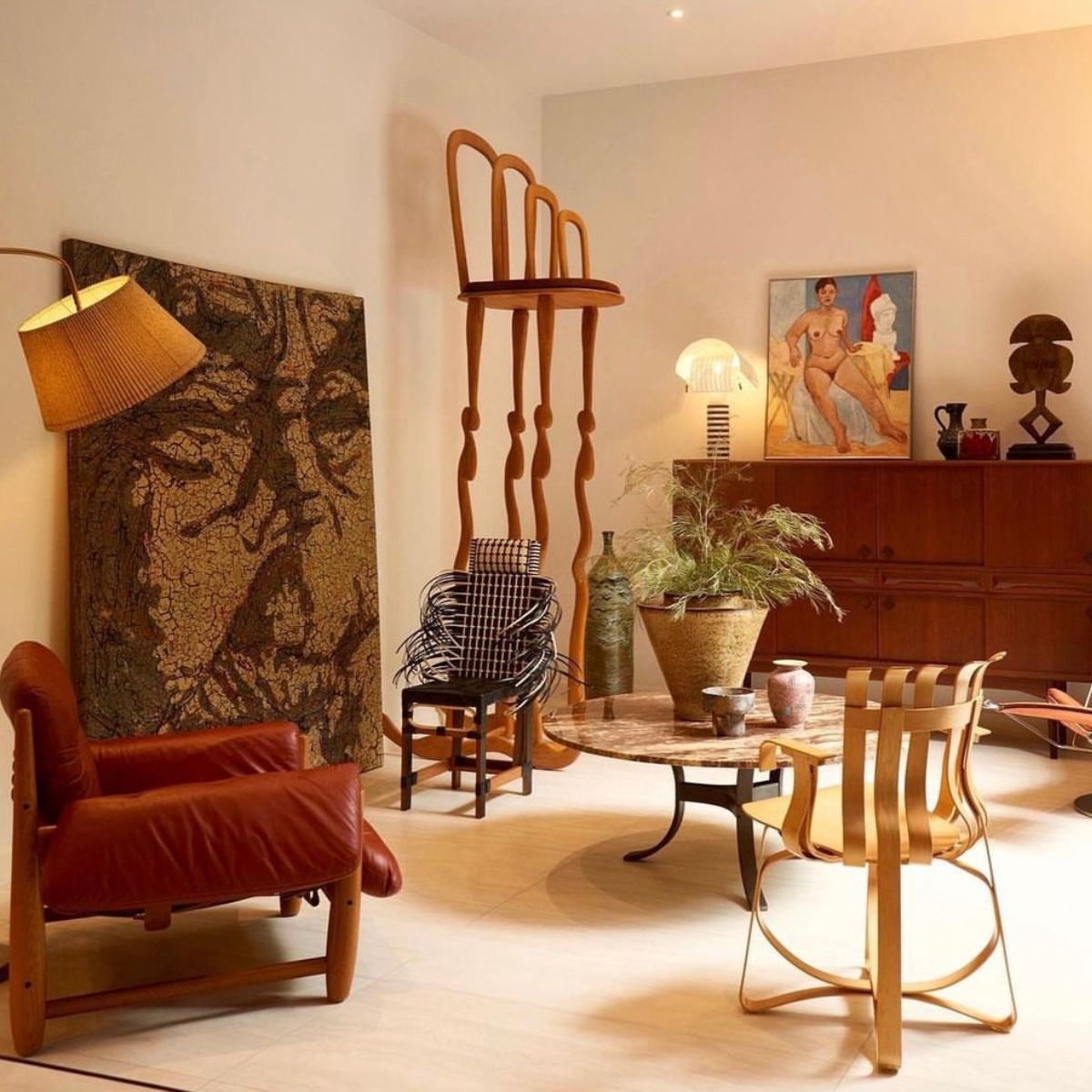
Nearly eighty years after its defining era, the furniture of the 1940s, ’50s and ’60s continues to appear in some of the most compelling interiors in the world: a low-slung teak sideboard beneath a contemporary painting, a sculptural lounge chair beside a rough plaster wall, chrome, leather and warm timber occupying spaces designed decades after the pieces themselves.
Every few years, we are told mid-century modern is having a revival. Then another revival, and another. Perhaps it never really went anywhere.
Shop Surround Living's Mid-Century Collection Here
A New Language for a New Way of Living
Mid-century modern design emerged during a period of extraordinary change. In the years surrounding and following the Second World War, architects and designers began looking forward rather than back. Cities were expanding, homes were changing and new materials and manufacturing techniques offered possibilities that previous generations could scarcely have imagined. Furniture needed to evolve with them.
The weight and ornamentation of earlier eras gave way to something lighter and more direct. Designers explored moulded plywood, fibreglass, tubular steel and plastic, creating forms that could be reproduced efficiently without abandoning beauty.

Charles and Ray Eames bent plywood into elegant, ergonomic shapes. Eero Saarinen approached furniture almost as architecture in miniature. Arne Jacobsen created chairs that appeared sculpted rather than assembled, while George Nelson considered furniture as part of a wider system for modern life.
The objective was not simply to make something that looked modern, but to reconsider how people actually lived. And perhaps this is the first clue to the movement's extraordinary longevity. The best mid-century modern furniture was rarely designed as decoration alone; its beauty was inseparable from its purpose.
A chair needed to support the body, a sideboard needed to hold the objects of daily life and a table needed to work within the changing scale of the modern home. Form followed function, but function was allowed to be beautiful.
This month, we’re featuring: (Pictured below)
- Finn Juhl “Chieftain’s Chair”
- Biomorphic Coffee Table, Art Deco
- Mario Bellini “Amanta 24” Modular Lounge Chair for C&B Italia

Why the Shapes Still Feel Modern
Look closely at contemporary furniture and the language of mid-century design is everywhere: tapered legs, floating cabinets, soft curves, low profiles, warm woods and sculptural seating. The references may be subtle, but they are unmistakable.
Part of this is because the best mid-century pieces were remarkably resolved. There is very little to remove and very little to add. Their proportions feel balanced and their materials are allowed to speak for themselves.
A beautifully designed teak cabinet does not rely on pattern or embellishment to hold attention. The grain of the timber becomes decoration, the joinery becomes detail and the silhouette does the work. There is a confidence in this restraint and, in an age of visual excess, furniture that knows exactly what it is feels increasingly radical.

It Was Never Really About Nostalgia
The words mid-century modern can conjure a very specific image: a sunken living room, walnut panelling, perhaps a cocktail trolley waiting somewhere in the corner. But the most interesting interiors today are not recreating the 1950s. They are borrowing from it.A mid-century chair can sit beside an eighteenth-century cabinet. A Danish sideboard can ground a room filled with contemporary art, while a chrome lamp from the 1960s can feel unexpectedly sharp against linen, stone and aged wood.This ability to move between eras is one of mid-century furniture's greatest strengths. The pieces are distinctive without being demanding. They carry history, but rarely insist that the rest of the room follow their rules.Perhaps that is why interior designers return to them so often. The goal is not to create a time capsule, but to introduce something with enough character to make a contemporary room feel less predictable.Surround Picks: (Pictured Below)- Honeycomb Modular Shelving by Bill Curry for Heller
- Bertoia Barstool
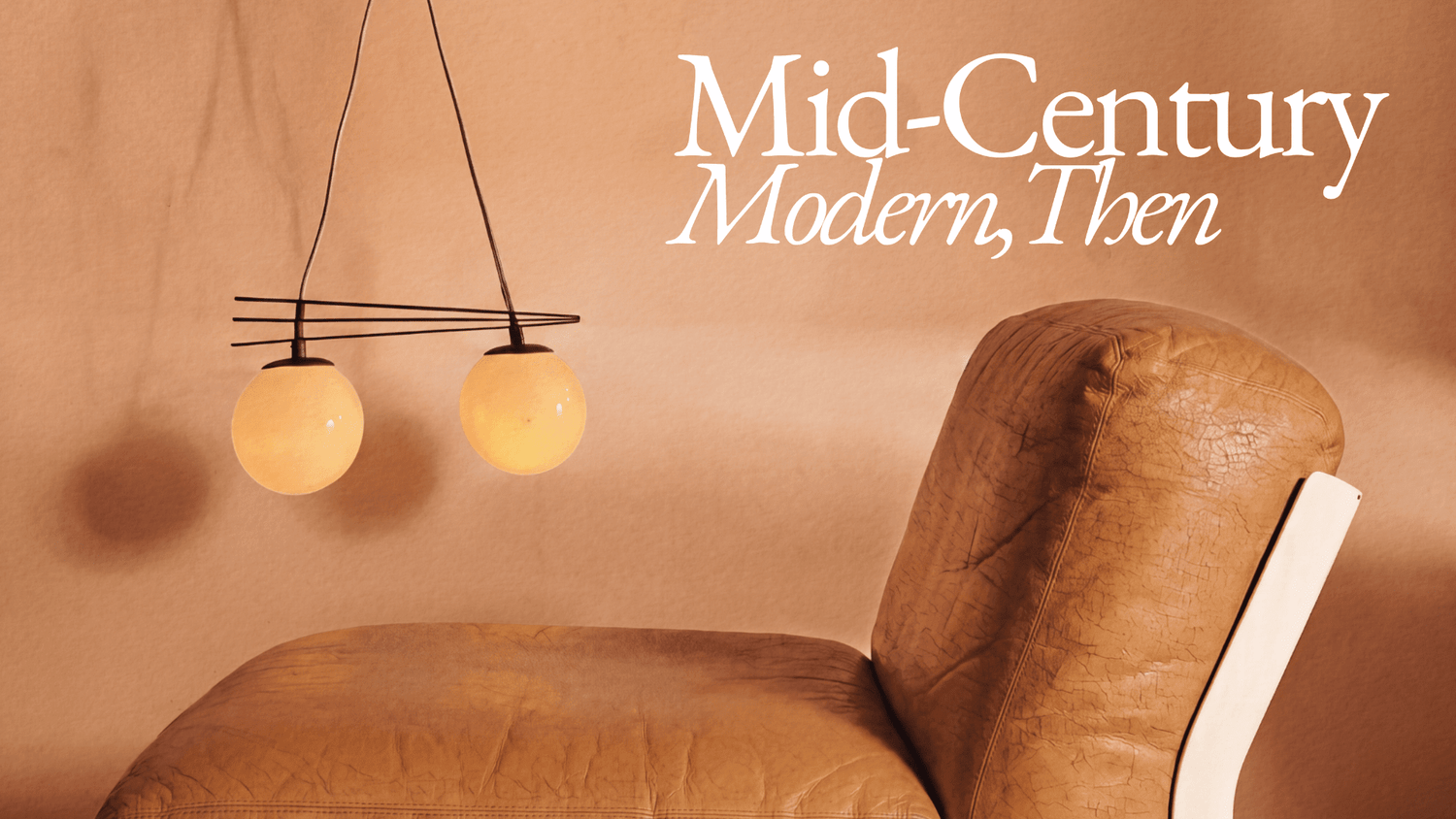
- Mid-Century Modern Suspension Lamp

Furniture With a Point of View
We live in an era of extraordinary access. A sofa can be ordered in seconds, an entire room can be furnished in a weekend and algorithms can show us thousands of versions of the same chair before breakfast. Convenience has transformed the way we decorate, but it has also created a certain sameness.
Mid-century furniture offers an antidote. Vintage pieces reveal their age in quiet ways: a softened timber edge, a patina that cannot be convincingly manufactured, the subtle variations created by decades of use. Even iconic designs take on different lives depending on where they have been.
There is a difference between buying a room and building one slowly. The latter leaves space for accidents, discoveries and objects that were never part of the original plan but somehow become the most important thing in the room.
Mid-century modern furniture fits naturally into this way of collecting. These are pieces that invite a second look and, often, a second life.
Good Design Ages Differently
Trends are often built around novelty. Their power comes from feeling new, and their decline begins the moment that newness fades. Good design works differently.
The most enduring mid-century pieces were built around proportion, material and human experience, qualities that are far less vulnerable to changing taste. A well-proportioned chair remains well proportioned, beautiful timber becomes richer with time and a functional object continues to be useful.
This does not mean every piece produced between the 1940s and 1960s deserves reverence. Mid-century modern was an era, not a guarantee of quality. But the furniture that has survived — the pieces we continue to collect, restore and reference — has often done so for a reason. Time is an unusually effective editor.
Surround Picks: (Pictured Below)
- Johannes Andersen for Silkeborg Vintage Bar Trolley
- Bubble Chair by Eero Aarnio
- Oneida Solid Wood Pedestal Dining Table

The New Generation of Collectors
Perhaps the most interesting chapter in the mid-century story is happening now. A generation born decades after the movement is discovering vintage mid-century furniture through flea markets, online marketplaces and interiors shared across the world. Many encounter a piece visually before ever learning the designer's name, and the attraction is often instinctive.Against contemporary architecture and modern technology, older furniture introduces warmth. It gives a room a sense of permanence. A teak desk or sculptural armchair reminds us that objects existed before we owned them and may continue to exist after us.
There is also a growing awareness that the most sustainable piece of furniture may be the one that has already survived fifty years. Choosing vintage is not simply an aesthetic decision; it offers an alternative to the cycle of disposable interiors and a chance to live with objects that were made to remain in circulation. It is furniture with a past, finding its place in the present.
It Never Left
Maybe we should stop describing mid-century modern as a comeback. Comebacks suggest disappearance. Instead, the movement has quietly remained in the background of contemporary design, its influence passing from one generation of interiors to the next.
Our final favorite Surround piece is the Sculptural Wire Mesh Lounge Chair Outdoor Chair, pictured below.