By Surround Living
Behind the black dresses and disciplined silhouettes was a private world of lacquer, gold, books, symbols and beautiful things accumulated over a lifetime.
Explore our Material World Collection →
Before there was Chanel the house, there was Gabrielle.
Born in 1883, Gabrielle Chanel spent part of her childhood at the abbey of Aubazine after the death of her mother. The environment was austere: stone architecture, religious ritual and a life far removed from the Parisian salons she would eventually inhabit. Books were among the things that stayed with her from those early years; decades later, the shelves of her Paris apartment would bow beneath them.
By 1910, she was in Paris, selling hats from a small boutique at 21 Rue Cambon. Then came Deauville, where in 1913 she began making sportswear from jersey—a material then more commonly associated with men's underwear—and Biarritz, where she opened her first couture house in 1915. Chanel was beginning to remove things from women's wardrobes: weight, stiffness, excessive ornament and the expectation that elegance had to be uncomfortable.
Her own rooms would eventually reveal another side of her entirely.
They were not sparse. They were not particularly minimal. And they certainly weren't afraid of decoration.

Then Came Rue Cambon
In 1918, Chanel acquired 31 Rue Cambon, establishing the address that would become inseparable from her name. The building brought together the boutique, couture salons and workshops, with Chanel's apartment above. More than a century later, the house still operates from the same address. Imagine walking upstairs from the immaculate world of couture and entering somewhere altogether more mysterious.
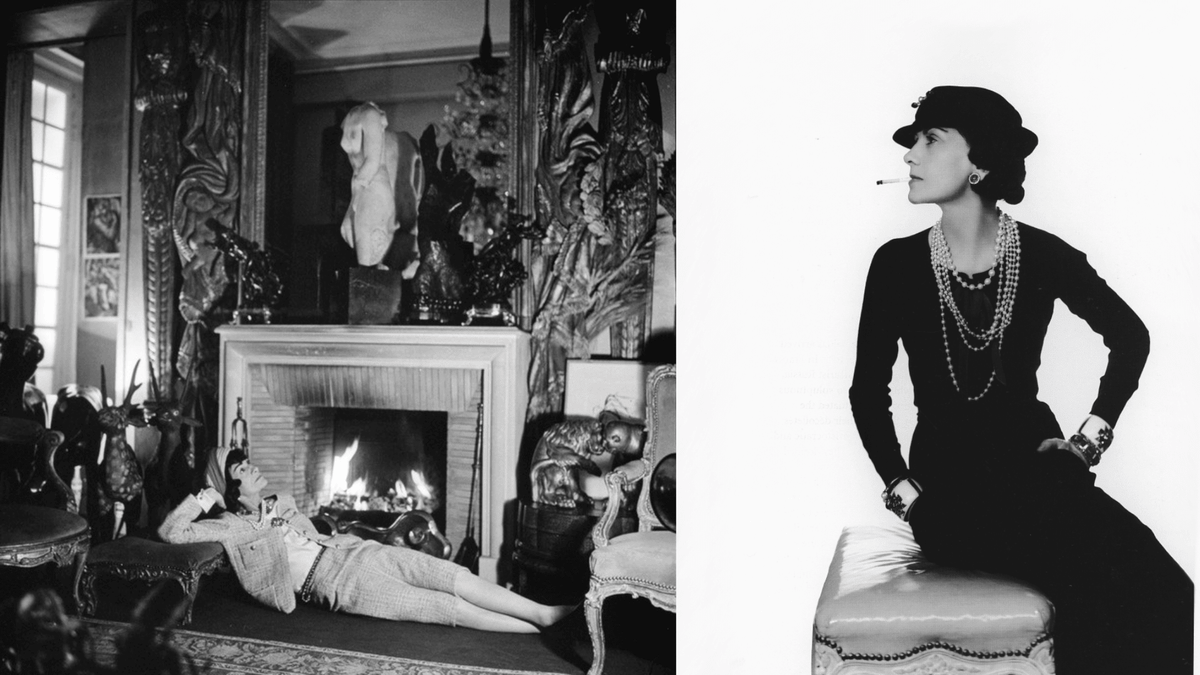
The palette darkens. Gold catches the light. Chinese lacquer screens appear against the walls. Lions sit among books and sculptures. Rock crystal, bronze, mirrors and carved objects occupy almost every available surface.
This was the private Chanel. The contrast with her fashion was remarkable. Downstairs, she was helping women simplify the way they dressed. Upstairs, she surrounded herself with things. And she kept surrounding herself with them.

Your Home Doesn't Have to Dress Like You
There is an assumption that personal style should translate literally into interiors. Someone who wears black imagines a monochrome apartment. A disciplined wardrobe somehow demands an equally disciplined living room. Chanel suggests otherwise.
Her clothes could be restrained because her rooms didn't have to be. The apartment at Rue Cambon brought together Asian antiques, European furniture, deeply decorative surfaces and objects connected to friends, travel, superstition and memory. The lesson isn't to recreate Chanel's apartment. It is that a home can reveal a completely different part of its owner.
Someone who dresses quietly might want an enormous lamp. Someone with a perfectly edited wardrobe might enjoy a cabinet crowded with strange ceramics. There is no contradiction to solve.

The Screens That Followed Her
Of all Chanel's possessions, perhaps none became as closely associated with her as her Coromandel screens.
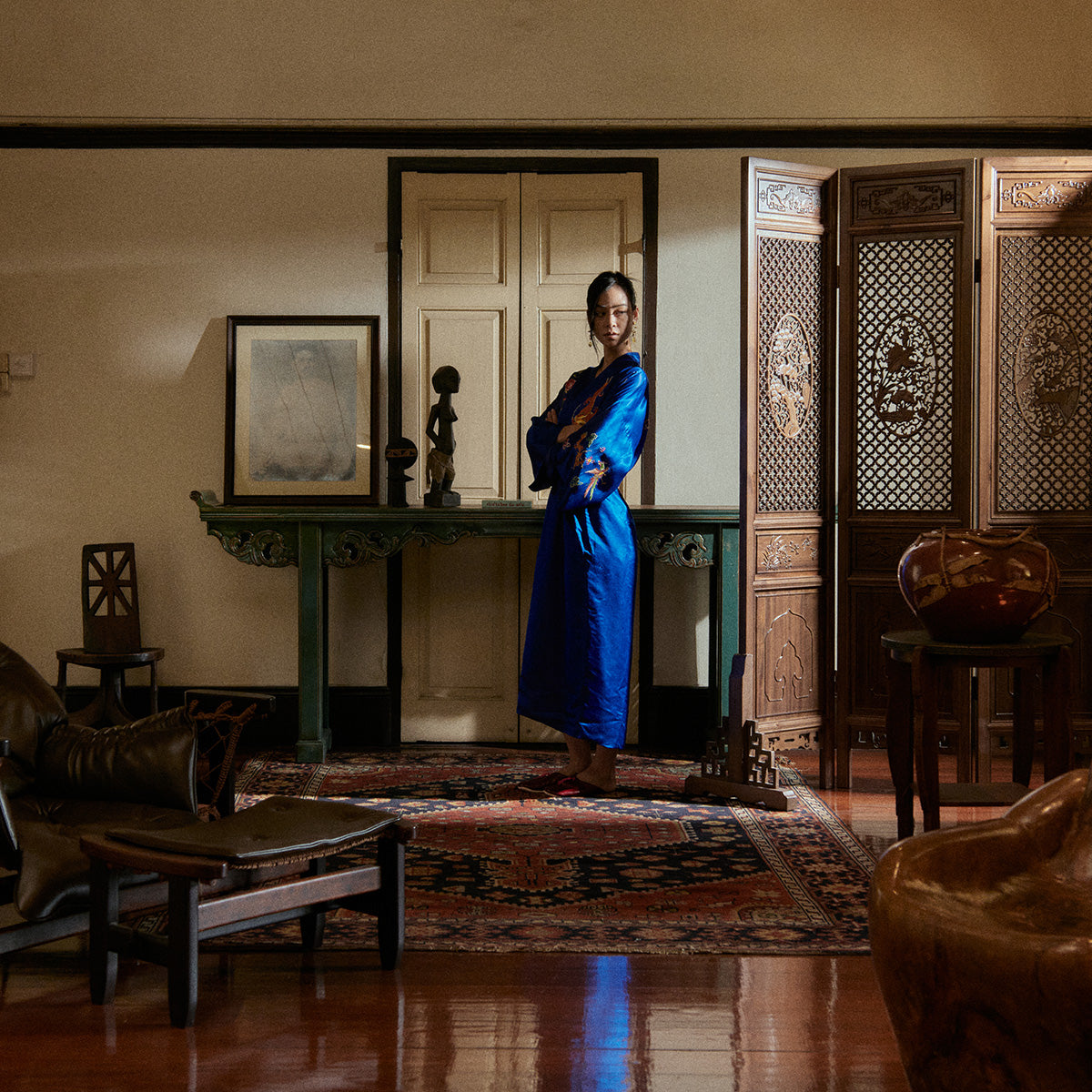
These elaborate Chinese lacquer panels depicted landscapes, flowers, animals and fantastical scenes. Chanel collected them in considerable numbers, sometimes using them not simply as decorative objects but almost as architecture—surrounding seating areas, dividing rooms and lining walls. Against beige suede and quieter upholstery, their dark surfaces transformed the rooms.
There is an interesting design lesson here. One beautiful object is decoration. Repetition can become identity. The same principle appears throughout her work: pearls upon pearls, chains repeated around a jacket, camellias appearing season after season. At home, she did something similar with screens, books, lions, crystal and gold.
Taking a cue from Chanel’s enduring fascination with Coromandel screens, we’ve gathered a few of Surround’s own favorites—pieces that bring the same sense of history, artistry, and quiet drama into a room. (Pictured Below)
- Oriental Wood Carved Panel Decoration
- Fragments Of Home Partition
- Pair of Chinese Carved Hardwood Wall Panels
- Mini Japanese Hand Painted Folding Divider

Find Your Obsessions
By the 1920s and '30s, Chanel's world had expanded far beyond fashion.
Through her close friendship with Misia Sert, she became part of an extraordinary artistic circle that included Jean Cocteau, Sergei Diaghilev, Igor Stravinsky and Salvador Dalí. She supported artists and the Ballets Russes, designed costumes and surrounded herself with people whose worlds moved between painting, theatre, dance, literature and fashion.
Those relationships entered the rooms too.
Works and objects connected to artists appeared alongside antiques and Chanel's own collections. Books filled the shelves—Homer and Shakespeare beside Proust, Dostoevsky, Tolstoy, Baudelaire and Cocteau. This wasn't a library assembled because books looked good in photographs. Chanel was an obsessive reader.
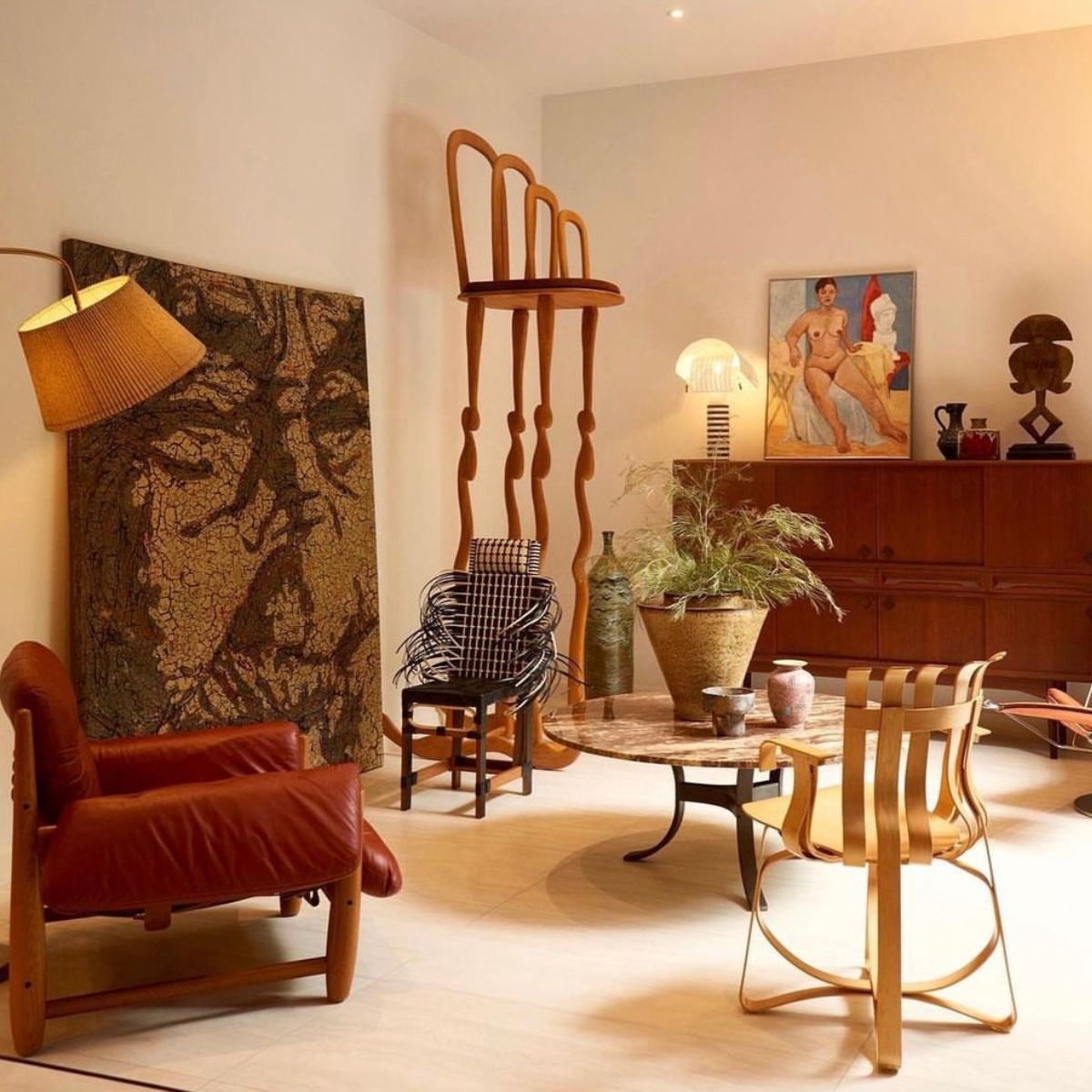
The most convincing collections usually begin accidentally. Perhaps you keep buying carved wooden furniture. Maybe every trip ends with another ceramic vessel wrapped in newspaper inside your suitcase. You repeatedly notice striped textiles, silver objects, old photographs or strange little stools. Eventually, repetition becomes a visual language. A theme is something you decide. An obsession is something you discover.
Surround’s Current Obsessions: (Pictured Below)
- Mythical Creature Beaded Ikat Table Runner
- Ming Ceramic Pot
- Carved Coconut Bowl with Silver Dragon Handle
- Somboun Silver Plated Copper Woven Rice Basket

Neutral Rooms Need Something to Fight With
Chanel loved beige, but looking at Rue Cambon is a useful reminder that beige was never the entire idea. There was black lacquer beside it. Gold. Dark timber. Crystal. Bronze. Red. Mirrors catching one object and multiplying it somewhere else in the room. The quietness of the background allowed the objects to become louder.
It is almost the opposite of the monochromatic neutral interiors that became ubiquitous a century later, where the sofa, rug, wall and vase can sometimes appear to have been selected from the same oatmeal-colored family.
Chanel's rooms had friction. A cream sofa becomes more interesting beside an antique chest. Pale plaster makes an eccentric sculpture look stranger. A highly decorative lamp can wake up an otherwise quiet room. The interesting part of a neutral interior may be the thing that doesn't quite behave.
And Then, the Riviera
Paris was only one version of Chanel's interior life.
In 1928, at the height of her success, she created La Pausa in Roquebrune-Cap-Martin on the French Riviera. It was the only house entirely imagined by Chanel herself and offered something Rue Cambon could not: space, Mediterranean light and escape.
The Riviera at the time was becoming a playground for artists, writers, aristocrats and the international avant-garde. Chanel's house became part retreat, part gathering place.
Guests came to stay. There was swimming, tennis, dancing and conversation. Salvador Dalí spent four months at La Pausa in 1938, producing work while staying at the villa. It is easy to imagine the difference between the two places.
Rue Cambon was dense, layered and inward-looking—a cabinet of Chanel's obsessions.
La Pausa breathed.
Yet both belonged unmistakably to the same woman.

Forget Having a "Style"
Coco Chanel passed in 1971, having spent much of her later life moving between two addresses separated by little more than a street: her apartment and workrooms at Rue Cambon and her suite at the Ritz.
Yet the apartment remains remarkably present. Its Coromandel screens, suede sofa, books, crystal and symbolic objects continue to influence the visual language of the house she founded. Contemporary Chanel interiors still reference elements of that private world.
Perhaps that is the final lesson. You don't necessarily need to know your interior style.
You need to know what you repeatedly respond to.
Look long enough at someone's home and patterns emerge: the woods they choose, the colors that return, the objects they cannot resist and the things they continue making room for despite having absolutely no practical need for them.
Chanel's rooms weren't memorable because everything matched. They were memorable because everything eventually became Chanel.
A beautifully designed room can make an immediate impression. But the rooms we remember tend to offer something more difficult to manufacture: the feeling that they could not possibly belong to anybody else.