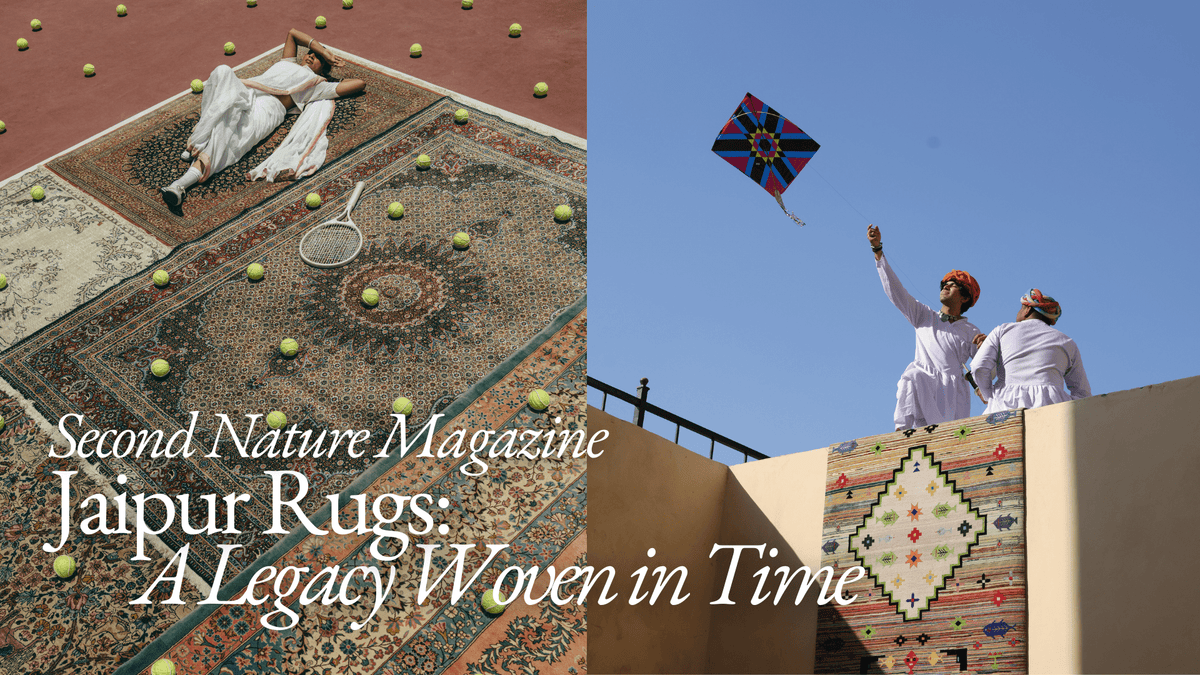
Exploring the architectural beauty of Jaipur and the centuries-old craftsmanship behind its celebrated handwoven rugs.
There are cities remembered for their architecture, and others for their artistry. Jaipur, the celebrated Pink City of Rajasthan, is one of the rare places where the two are inseparable. Behind its rose-tinted façades, magnificent palaces, and intricately carved archways lies a world shaped by generations of craftsmanship.
From the geometric precision of its historic architecture to the elaborate motifs of its traditional textiles, Jaipur has long embraced decoration as an expression of cultural identity. Rich saffrons, muted ochres, deep indigos, and warm terracotta tones form a distinctive visual language that continues to inspire contemporary design.
Yet beyond its architectural splendour, another art form has quietly become synonymous with the region: the intricate craft of handwoven rugs.
Discover The Surround | Jaipur Rugs Collection →

The Art of the Human Hand
At the heart of Jaipur's textile heritage is a process that celebrates patience, precision, and the extraordinary skill of its artisans.
Among those preserving and reimagining this tradition is Jaipur Rugs, a design house founded in 1978 that has brought Indian craftsmanship into contemporary interiors around the world.
Every hand-knotted rug is the result of an intricate journey, transforming natural fibres into an enduring work of art. While the finished piece may appear effortless, its creation involves a series of carefully considered stages.

From Fibre to Finished Masterpiece
01. Preparing the Yarn
The journey begins with the selection of fibres such as wool and silk. These materials are cleaned, prepared, and spun into yarn, establishing the texture, softness, and character of the finished rug.
02. The Art of Colour
The yarn is dyed to achieve the desired palette, from earthy neutrals to richly saturated hues. Colour plays an essential role in bringing the design to life, creating depth, contrast, and subtle tonal variation.
03. Hand-Knotting the Design
Perhaps the most remarkable stage, weaving takes place on a traditional loom, where artisans tie individual knots by hand to gradually reveal the pattern. Depending on the rug's size and intricacy, this meticulous process can take several months.
04. Washing and Finishing
Once removed from the loom, the rug undergoes washing, drying, trimming, and finishing. These final touches refine its texture, enhance the colours, and reveal the full beauty of the woven design.
The result is far more than a decorative textile. Each rug carries subtle variations and individual characteristics that reflect the human hand behind its creation.
The Rugs We Love: (Pictured Below)
- Aurora Jaipur Rugs hand knotted wool and silk Rug lichen
- Manchaha Jaipur Rugs hand knotted wool and bamboo silk Rug
- Aprezo Jaipur Rugs flat weaves water hyacinth Rug light peach
- Indian Hand Tuffed Rug - Exposed Spine
- Sthir Jaipur Rugs hand knotted wool Rug apricot
- Manchaha Indian Bamboo Silk Hand Knotted Rug
- Verve Jaipur Rugs hand knotted acrylic Rug ebony

Where Heritage Meets Contemporary Design
What makes Jaipur's weaving tradition particularly compelling is its ability to evolve without losing its identity.
Through Jaipur Rugs, traditional techniques find new expression in contemporary compositions, from intricate heritage-inspired patterns to abstract designs that resemble paintings rendered in fibre.
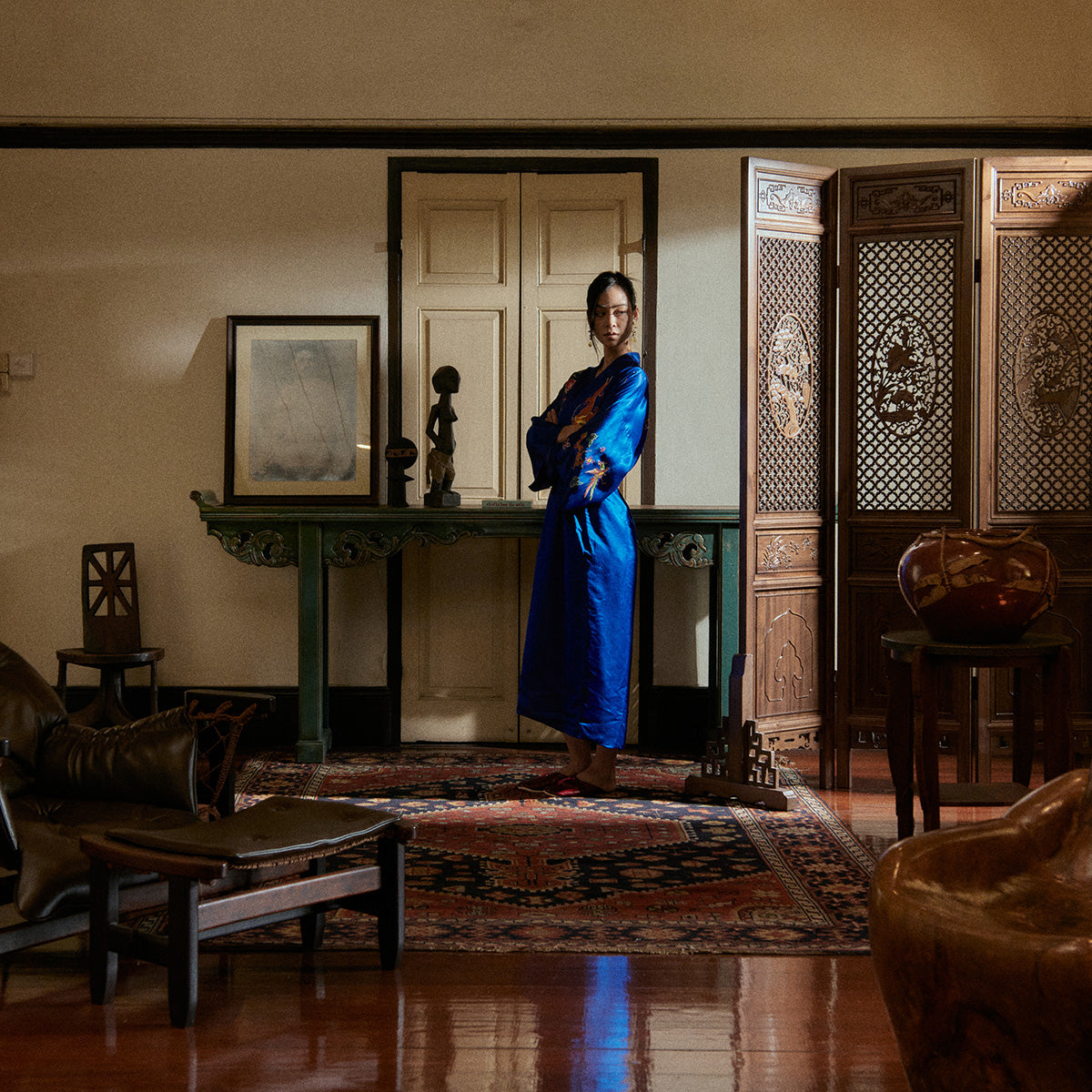
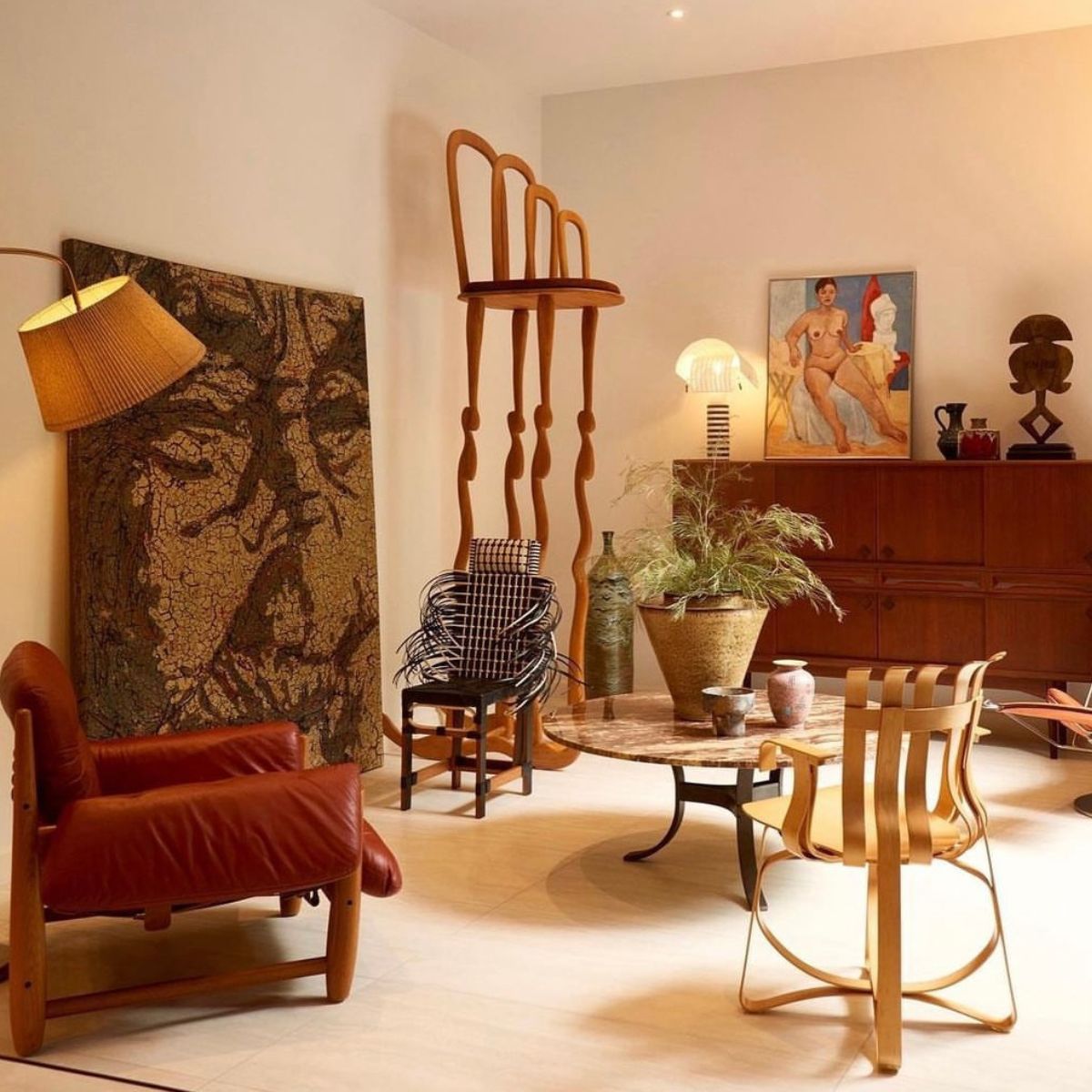
In a minimalist interior, a handwoven rug introduces warmth and quiet texture. Paired with antique furniture and collected objects, it creates an intriguing dialogue between different periods, materials, and styles.
There is something undeniably luxurious about these contrasts: the softness of natural fibres against polished stone, the irregularity of handwoven textures beside clean architectural lines, and the richness of traditional craftsmanship within a contemporary setting.

A Legacy to Live With
As the world of luxury interiors increasingly turns toward authenticity, provenance, and craftsmanship, Jaipur offers a compelling reminder that true refinement is not simply about extravagance, but about the time, skill, and intention behind an object.
Every handwoven rug tells a story of its maker, carrying generations of knowledge into the spaces we inhabit today.
From the rose-coloured streets of the Pink City to beautifully considered interiors around the world, Jaipur's creative legacy continues to unfold—one knot at a time.